Health insurance utilization review
A utilization review assistant for hospital case managers: patients by department, a three-step flow that selects the source notes, chooses the diagnosis and its objective criteria from care guidelines and payer requirements, and generates the initial or concurrent review draft with the reasoning shown, for the case manager to edit, save and send to the insurer.
One working session with the people in the seat: which decisions, which systems, what a good week looks like.
The app you see above, running on your own exports instead of the simulated world. Every screen, every decision, your numbers.
Wired to your systems with your permissions, agents proposing, people approving, the ledger recording who did what.
Overview
Every inpatient day needs a utilization review that convinces the payer the level of care is justified. Case managers read the chart, find the evidence and write the note by hand, and denials follow when the wording misses the payer's criteria.
The assistant lists the department's patients and walks the case manager through the review: pick the notes, choose the diagnosis and the objective criteria for it, and generate the draft. The reasoning shows which criteria and which notes were read; the draft cites the vitals, labs and treatments that support the level of care. The case manager edits any line, saves it and sends it with wording matched to the payer.
Key features
- Intelligent chart review: abnormal labs, comorbidities and risk factors highlighted in the patient's notes.
- Extract relevant evidence: care guidelines per diagnosis and payer-specific requirements applied as objective criteria.
- Utilization review writing: initial and concurrent review drafts from the selected notes, with the reasoning visible.
- Edit, save and send: every line editable before the review goes to the insurer.
Decisions it produces
- Select the notes that support the review
- Choose the diagnosis and objective criteria
- Edit and save the review draft
- Send the review to the payer
Data sources
| EHR | H&P, progress and nursing notes, vitals, labs, medications |
|---|---|
| Care guidelines | objective criteria per diagnosis |
| Payer requirements | level-of-care criteria per plan |
| UM system | reviews, dates of service, authors |
Simulated data throughout. Book a call to see it on your own systems.
Related demos
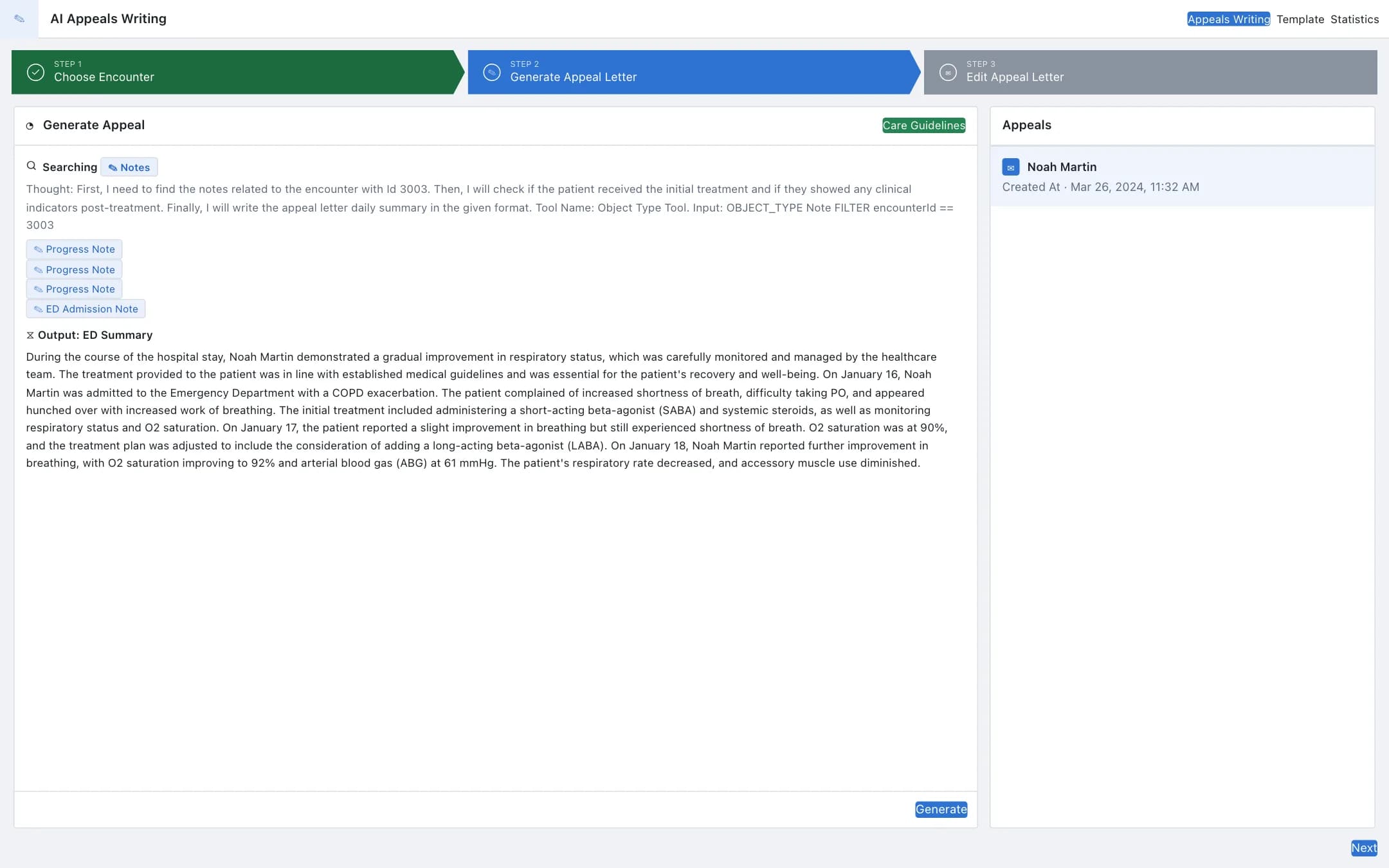
Hospital claims denials management
Denials management for a hospital: choose a denied encounter, generate the appeal letter from the chart notes and care guidelines with the reasoning shown, edit and submit it, a template that trains the letter style from real examples, and statistics on letters submitted and time saved.
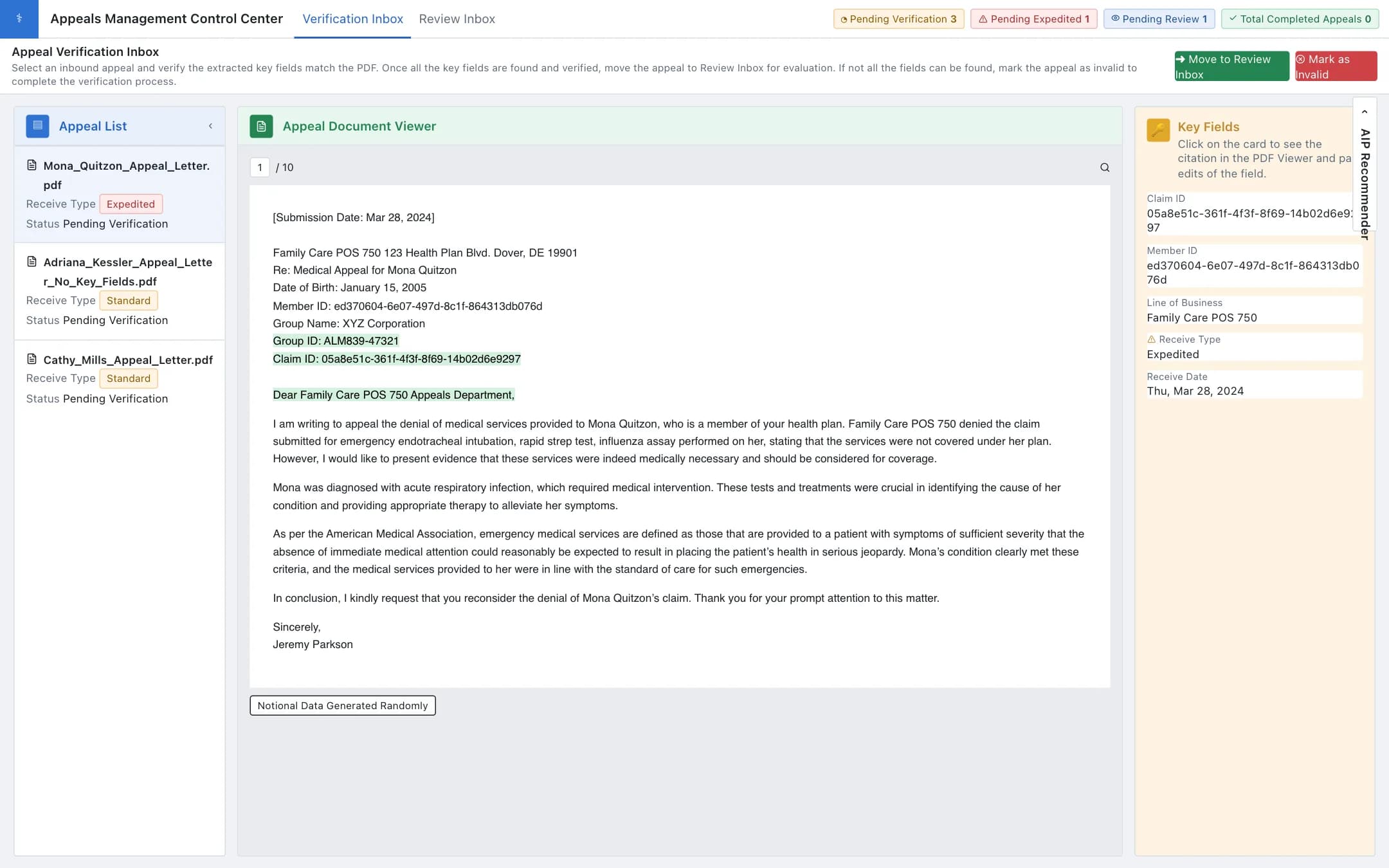
Health insurance appeal management
Appeals management for a health plan: a verification inbox where key fields extracted from the appeal PDF are checked against their citation and corrected by clicking the section, a review inbox with the claim, the member and the AI recommendation with its logic chain, an approve or deny decision, and the letter generated from the organisation's approved template and sent.
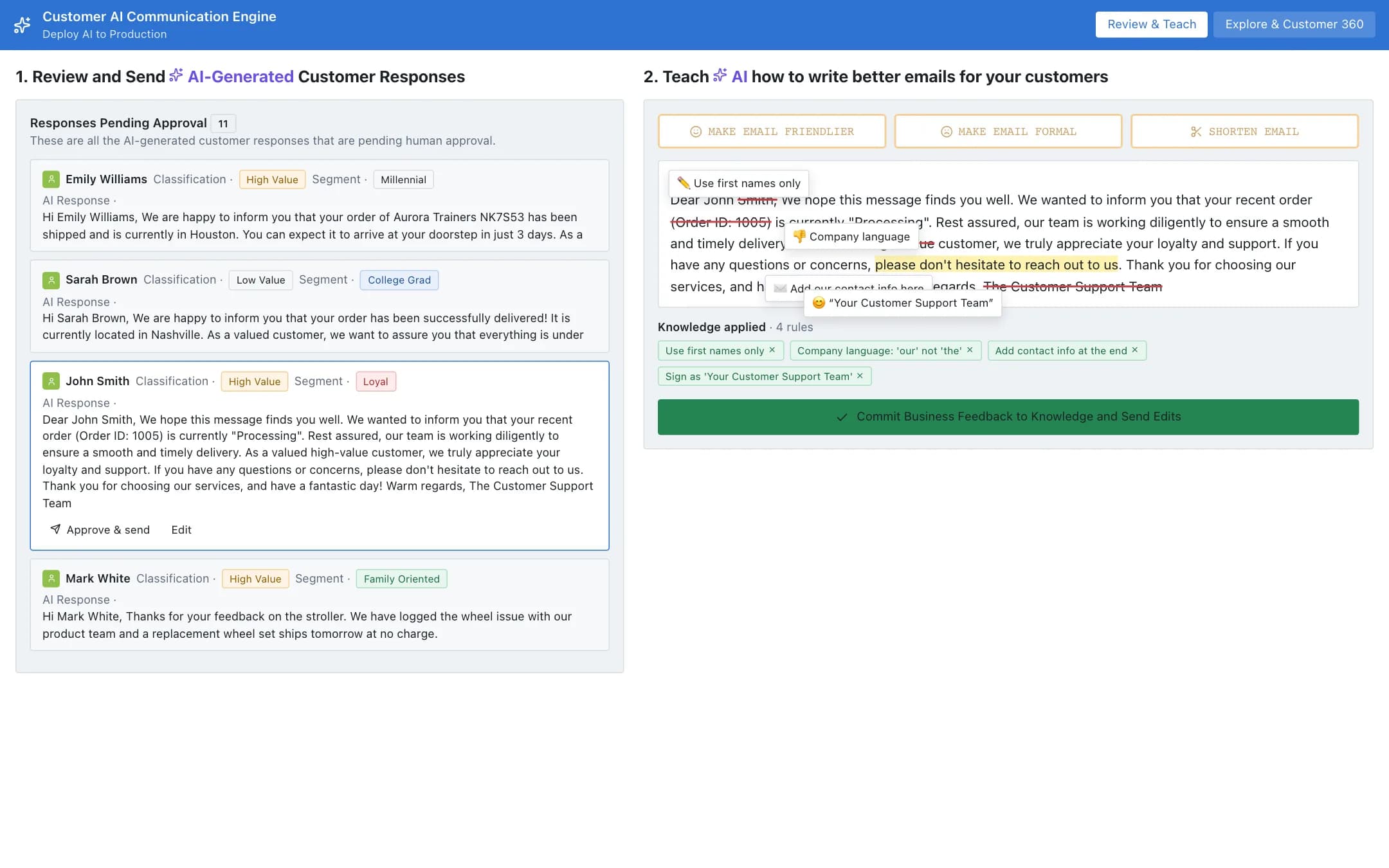
Customer service engine
A customer communication engine that drafts responses from the customer's orders, status and history, queues them for approval, lets the operator mark up a draft and commit the feedback as knowledge that shapes future drafts, and a customer 360 with the order timeline and the graph of everything the customer links to.