Procurement negotiations assistant
A vendor 360 with exposure on a world map and concentration history, feeding a negotiation cockpit: data-backed arguments, a should-cost bill of materials down to the commodity, and vendor claims extracted as they arrive.
One working session with the people in the seat: which decisions, which systems, what a good week looks like.
The app you see above, running on your own exports instead of the simulated world. Every screen, every decision, your numbers.
Wired to your systems with your permissions, agents proposing, people approving, the ledger recording who did what.
Overview
Negotiation prep is a week of pulling contracts, order history, term violations and market indexes into a deck. Most of it is stale by the meeting, and the vendor's claims arrive in emails nobody parses.
The assistant keeps the vendor 360 live: alerts, sanctions and tariff exposure, disruptions on a map, and concentration by supplier, country and corridor. From it the cockpit ranks arguments by expected value, generates a should-cost BOM to the commodity level against the quote, and extracts each vendor claim with a recommended response. Outcomes are logged so the next negotiation starts smarter.
Key features
- Bill-of-material generation: vendor products enriched to the commodity level for should-cost analysis against the quote.
- Negotiation cockpit: relationship context (agreements, past negotiations, term violations) and exposure context (competitive vendors, alternative materials, forecast) with ranked arguments for human review.
- Vendor claim extraction: amended clauses, supply risks and market claims read from emails and redlines with a counter drafted.
- Vendor 360: entity stats, supply chain and disruption alerts, global exposure map, concentration and transaction history.
Decisions it produces
- Add an argument to the brief and send it
- Draft a counter or accept a vendor claim
- Set the ask from the should-cost gap
- Acknowledge or escalate a supply chain alert
Data sources
| ERP and spend cube | orders, transaction values, concentration by supplier and country |
|---|---|
| Contracts and past negotiations | agreements, terms, violations, outcomes |
| Market data | commodity indexes, tariff schedules, freight |
| External feeds | disruption events, sanctions lists, ESG scores |
Simulated data throughout. Book a call to see it on your own systems.
Related demos
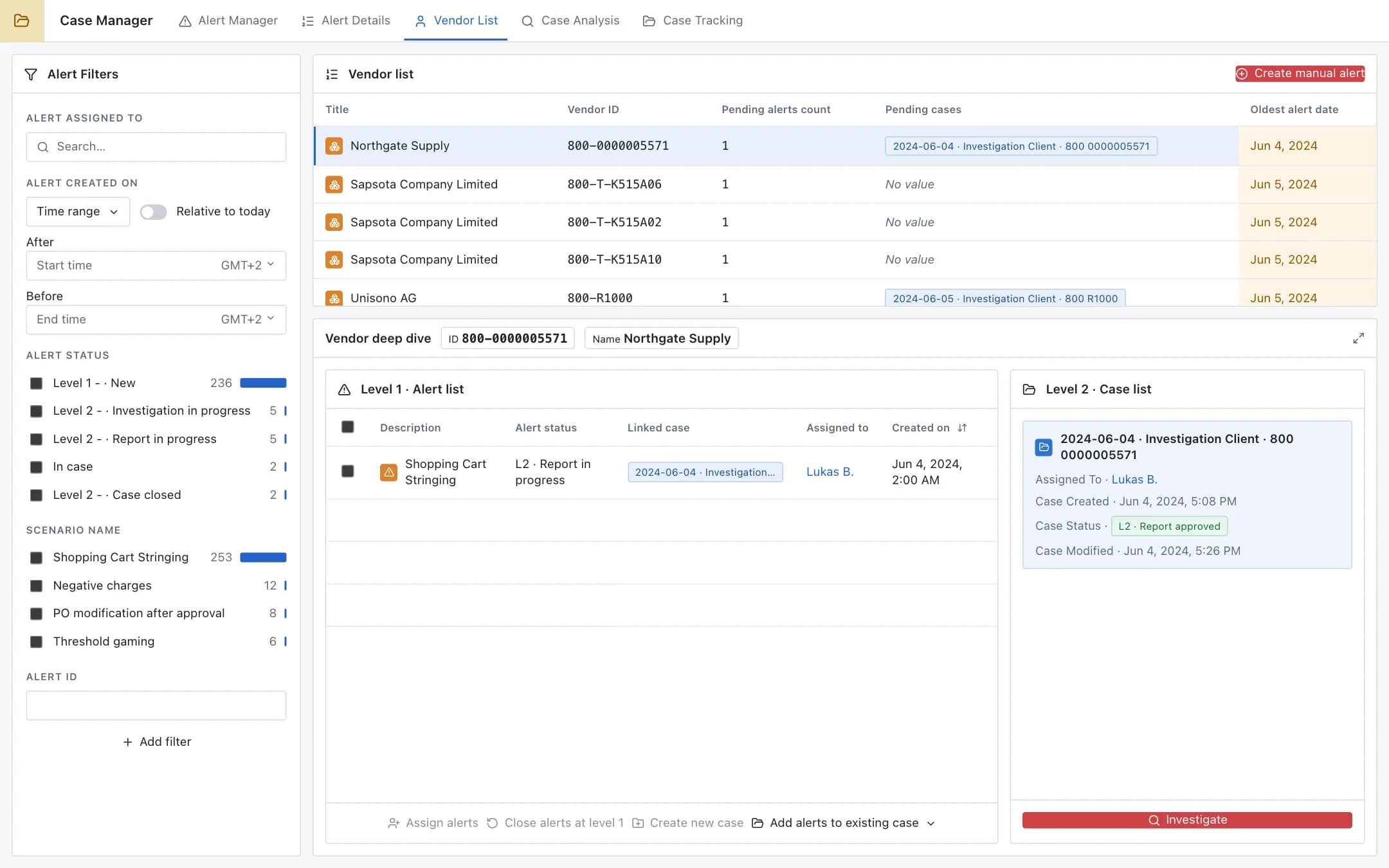
Procurement fraud detection
Purchase orders, invoices, vendors and bids scanned by detection rules for shopping cart stringing, PO modification after approval and threshold gaming; alerts triaged per vendor, escalated into cases, investigated, and fed back into the rules.
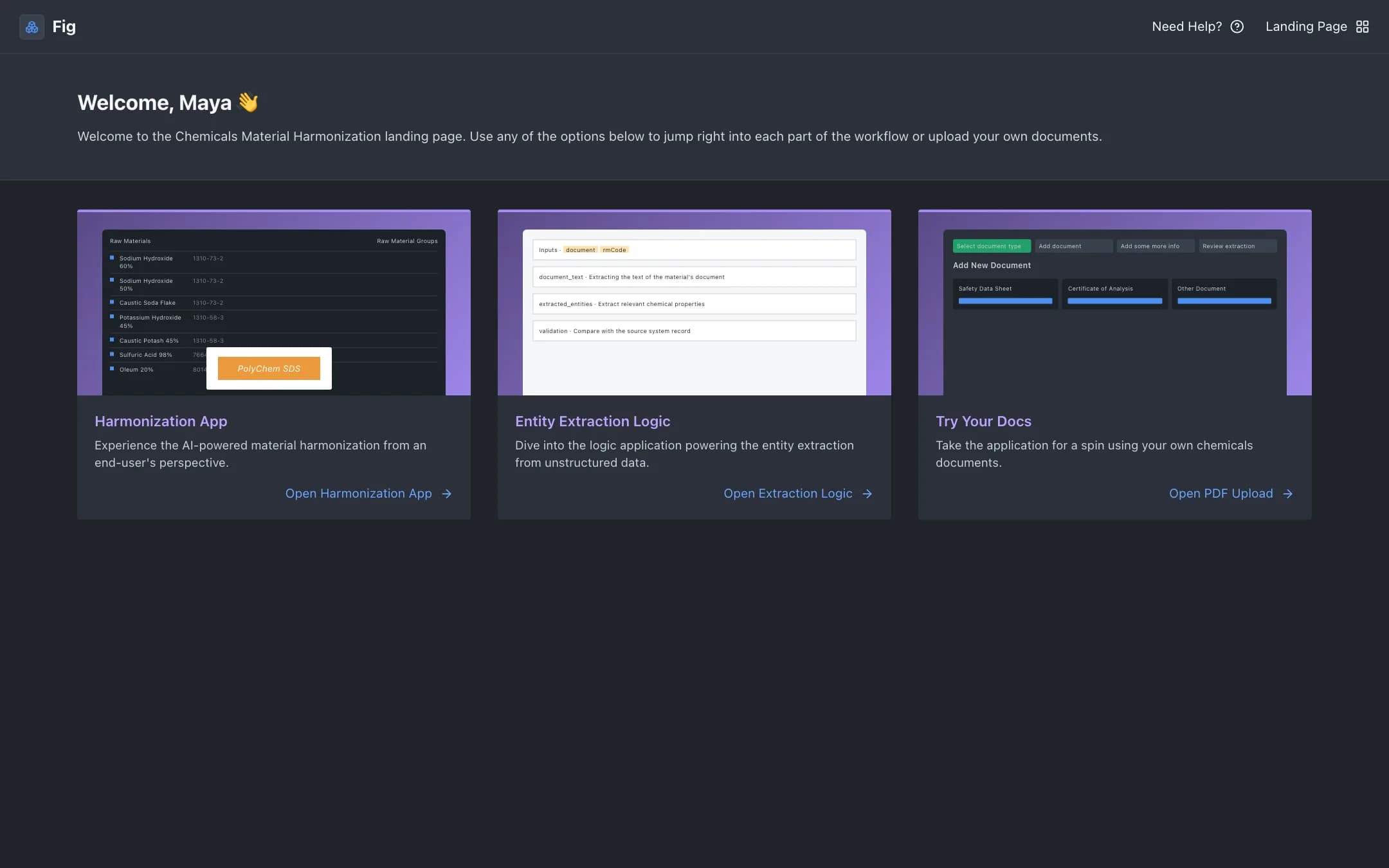
Material harmonization
Raw materials from several ERPs enriched with properties extracted from safety data sheets and certificates of analysis, grouped into harmonized materials with AI suggestions, so a bill of materials can name an alternative supplier.
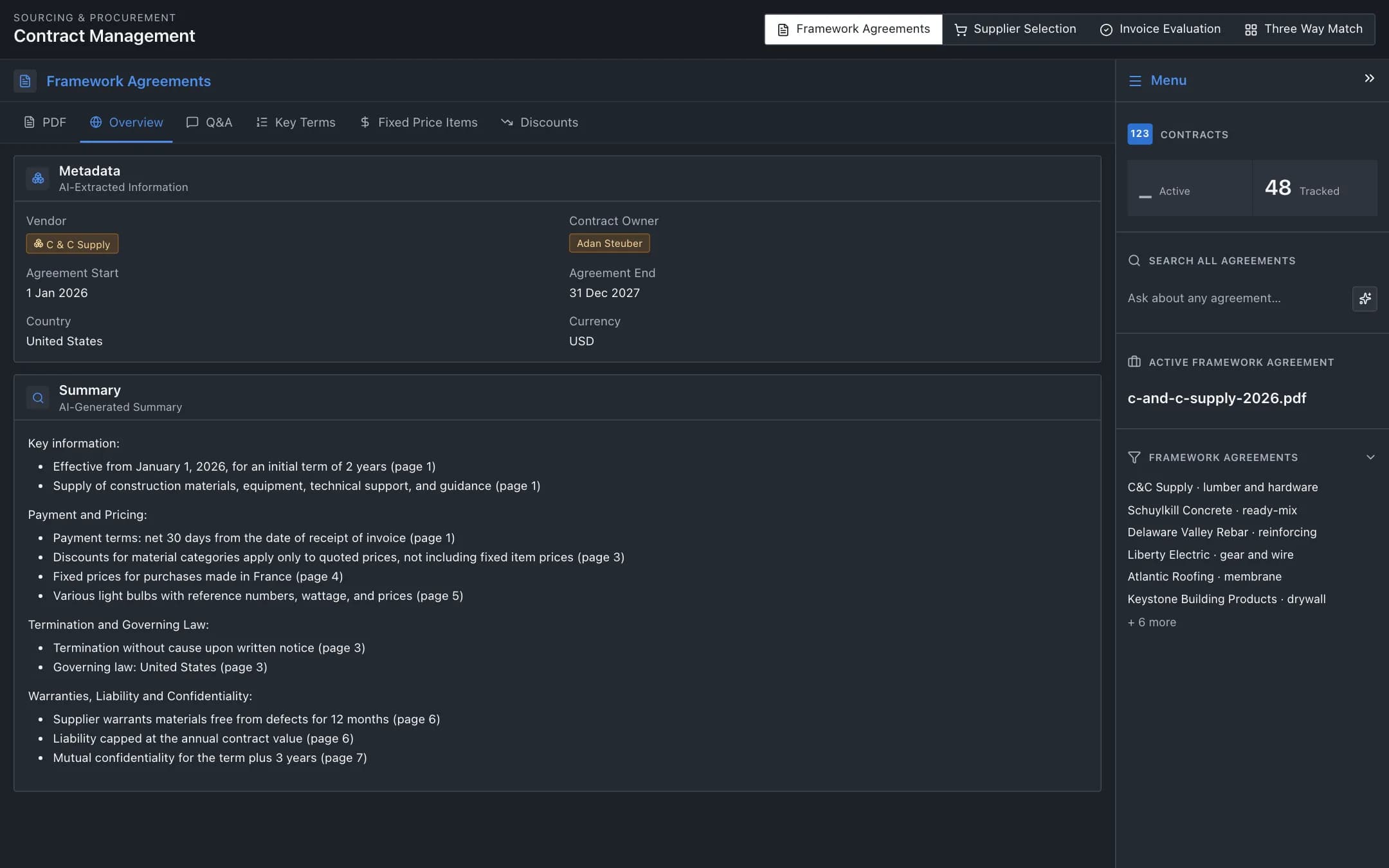
Construction procurement and three-way matching
Framework agreements summarised and queried by AI, suppliers suggested for each parsed purchase request with price and lead-time comparison, invoices monitored, and purchase orders, invoices and goods receipts matched three ways with the discrepancies flagged.