Direct material consolidation
Value engineering for direct materials: clusters of interchangeable parts found from properties extracted off mechanical drawings, the PLM parts and their ERP counterparts with unit prices, forecast savings from consolidating to the cheapest, a cost impact simulation with supplier bulk quotes, the rule behind the cluster, and a change request to the change control board.
One working session with the people in the seat: which decisions, which systems, what a good week looks like.
The app you see above, running on your own exports instead of the simulated world. Every screen, every decision, your numbers.
Wired to your systems with your permissions, agents proposing, people approving, the ledger recording who did what.
Overview
Six washers with the same screw size sit in the bill of materials under six part numbers from six drawings, bought at six prices. Finding them means an engineer reading drawings and a buyer reading the ERP, and nobody owns the change.
The app links PLM parts to ERP parts, extracts dimensions and material from the drawings with vision models, and groups interchangeable parts by rule. Each cluster shows its PLM and ERP parts with prices, the forecast savings, a simulation of the consolidated unit price against supplier quotes, and the rule logic to tune. Raising the change request sends the affected EBOM references to the change control board.
Key features
- AI entity extraction: dimensions, material and other properties from mechanical drawings and technical documents.
- Streamlining materials: similar part groupings proposed for value analysis and engineering actions.
- Cost impact: forecast annual savings and a unit price simulation with supplier bulk quotes.
- Change control: consolidation tracked through the change control board process.
Decisions it produces
- Accept a cluster as interchangeable
- Choose the target ERP part
- Apply a supplier quote to the simulation
- Raise the change request
Data sources
| PLM | parts, categories, drawings |
|---|---|
| ERP | part numbers, suppliers, unit prices, volumes |
| Drawings | extracted dimensions and materials |
| Suppliers | bulk quotes |
Simulated data throughout. Book a call to see it on your own systems.
Related demos
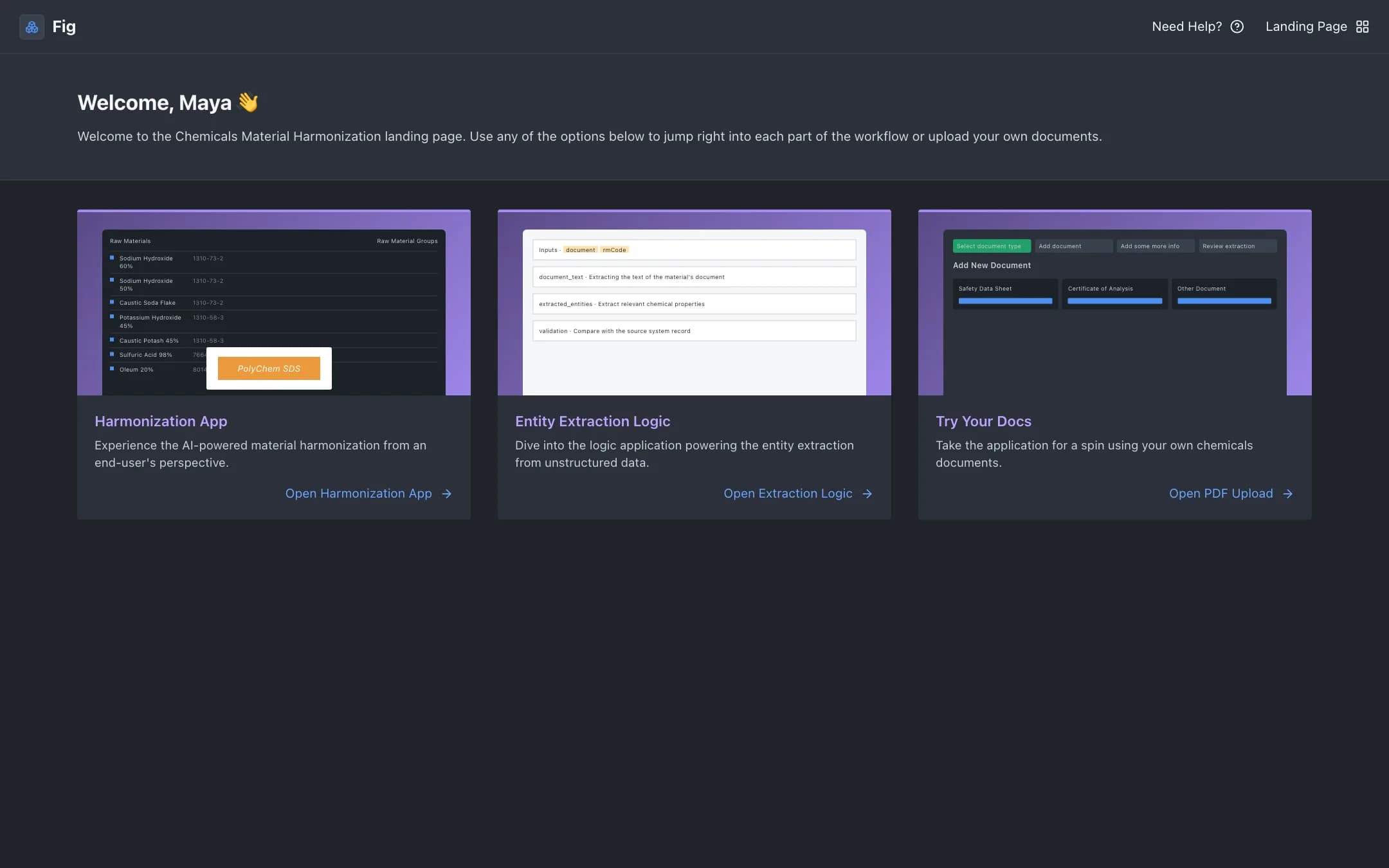
Material harmonization
Raw materials from several ERPs enriched with properties extracted from safety data sheets and certificates of analysis, grouped into harmonized materials with AI suggestions, so a bill of materials can name an alternative supplier.
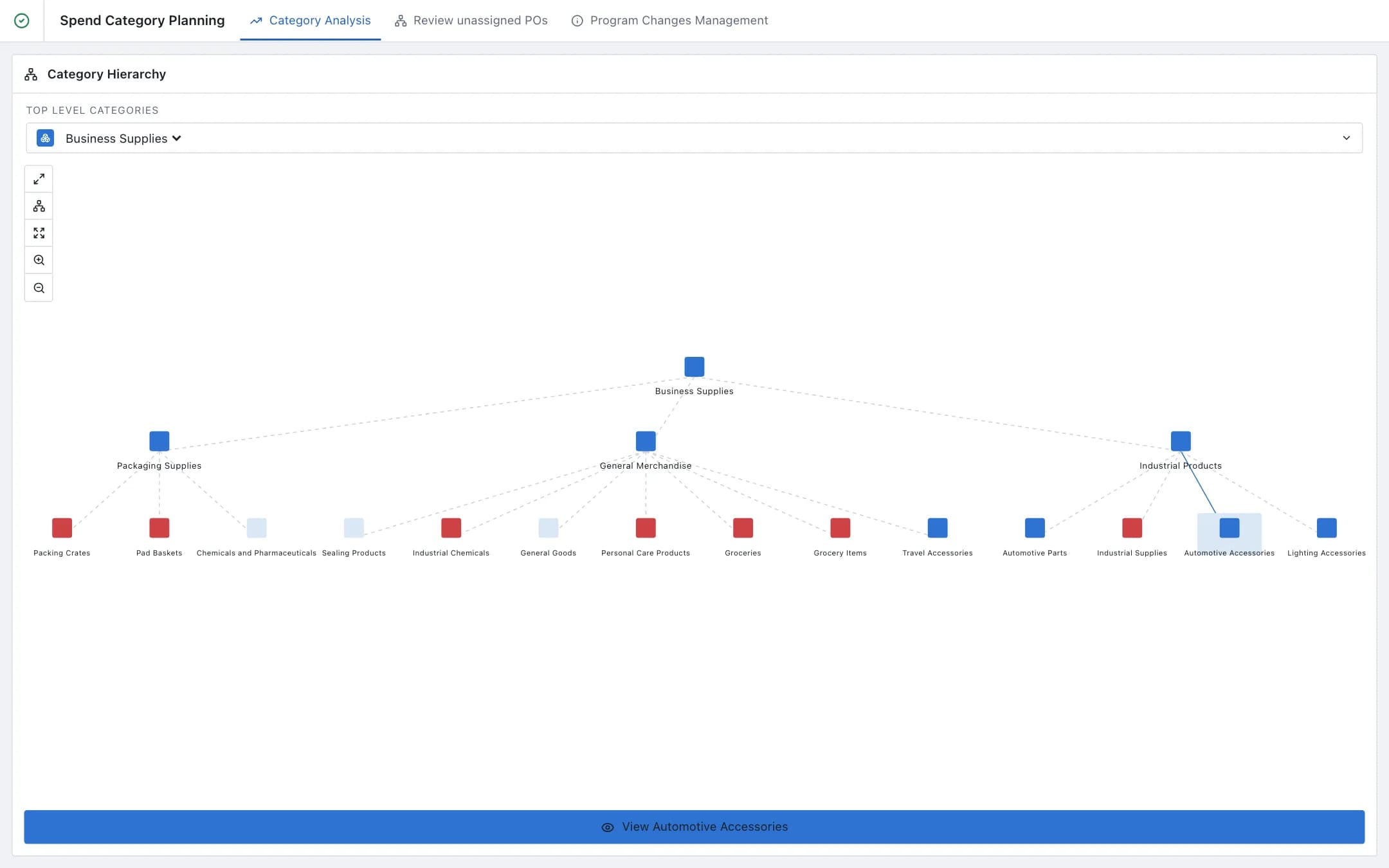
Intelligent purchasing
Historical purchases harmonized onto a canonical product hierarchy: spend by category over time and vendor, materials and vendor price analysis, savings simulations for moving volume to a vendor, AI matching of uncategorized purchase orders, and a log of every program change.
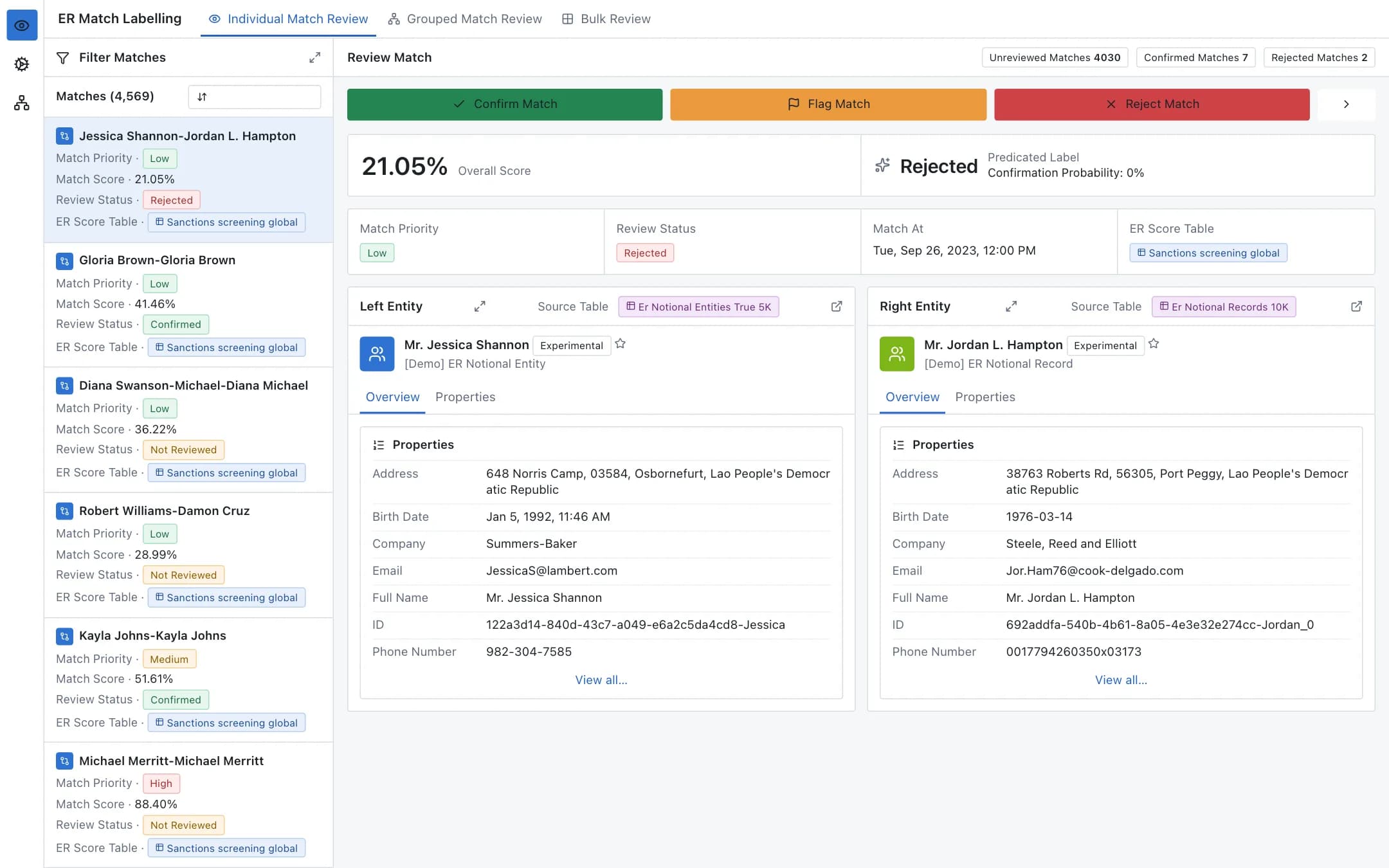
Entity resolution
A configurable pipeline that cleans, pairs and scores records to find the same person, company or product across datasets, with a labelling app where stewards confirm, flag or reject each match and a config manager that defines every step.