Units sitting vacant after move-out
A board of units in turn, columns for the steps (inspect, clean, paint, repairs, flooring, photos, list), days on every card, and the vendor on every step. Steps with nobody booked come first, because that is where the days go.
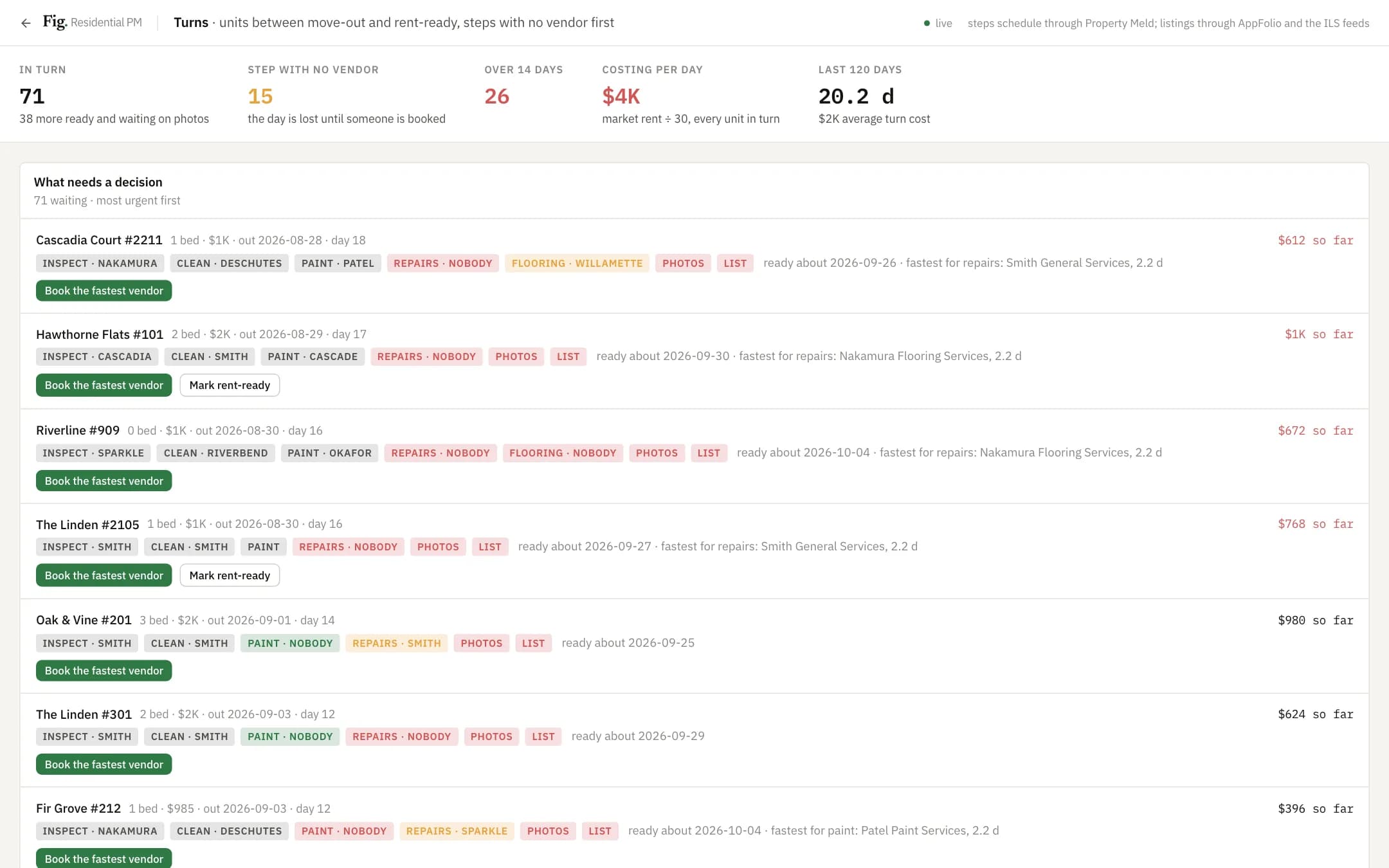
A sample of the app on simulated data. Book a call to click through it live, or to see it on your own exports.
One working session with the people in the seat: which decisions, which systems, what a good week looks like.
The app you see above, running on your own exports instead of the simulated world. Every screen, every decision, your numbers.
Wired to your systems with your permissions, agents proposing, people approving, the ledger recording who did what.
Overview
From move-out to rent-ready takes 12 to 25 days that could be 7. The steps are sequenced by phone call, and a unit loses a day every time the next vendor was not booked before the last one finished. Every vacant day costs market rent divided by thirty.
The board shows each unit's steps and their state. For the current step with no vendor, the app offers the three vendors with the trade in that market ordered by days, with cost alongside, and books the one you pick. Marking a unit ready schedules photos; listing it pushes to every feed and tells the prospects waiting for that floor plan.
Decisions it produces
- Book the fastest vendor for the current step
- Approve a scope over the ceiling
- Mark rent-ready
- List the unit on every feed
The world it runs on
A simulated third-party residential property manager in the Pacific Northwest: about 4,400 doors across 46 properties (multifamily communities and scattered single-family homes), 63 owners, six months of ledger, 26 weeks of inquiries, work orders and turns. Every number on screen traces to the world; every decision writes back to it.
Every company, person and number in this demo is simulated; anchors are public facts or plausible for the segment. Substitute your own feeds and the same apps run on your operation, with your permissions.
Related demos
 Production ready in 15 days
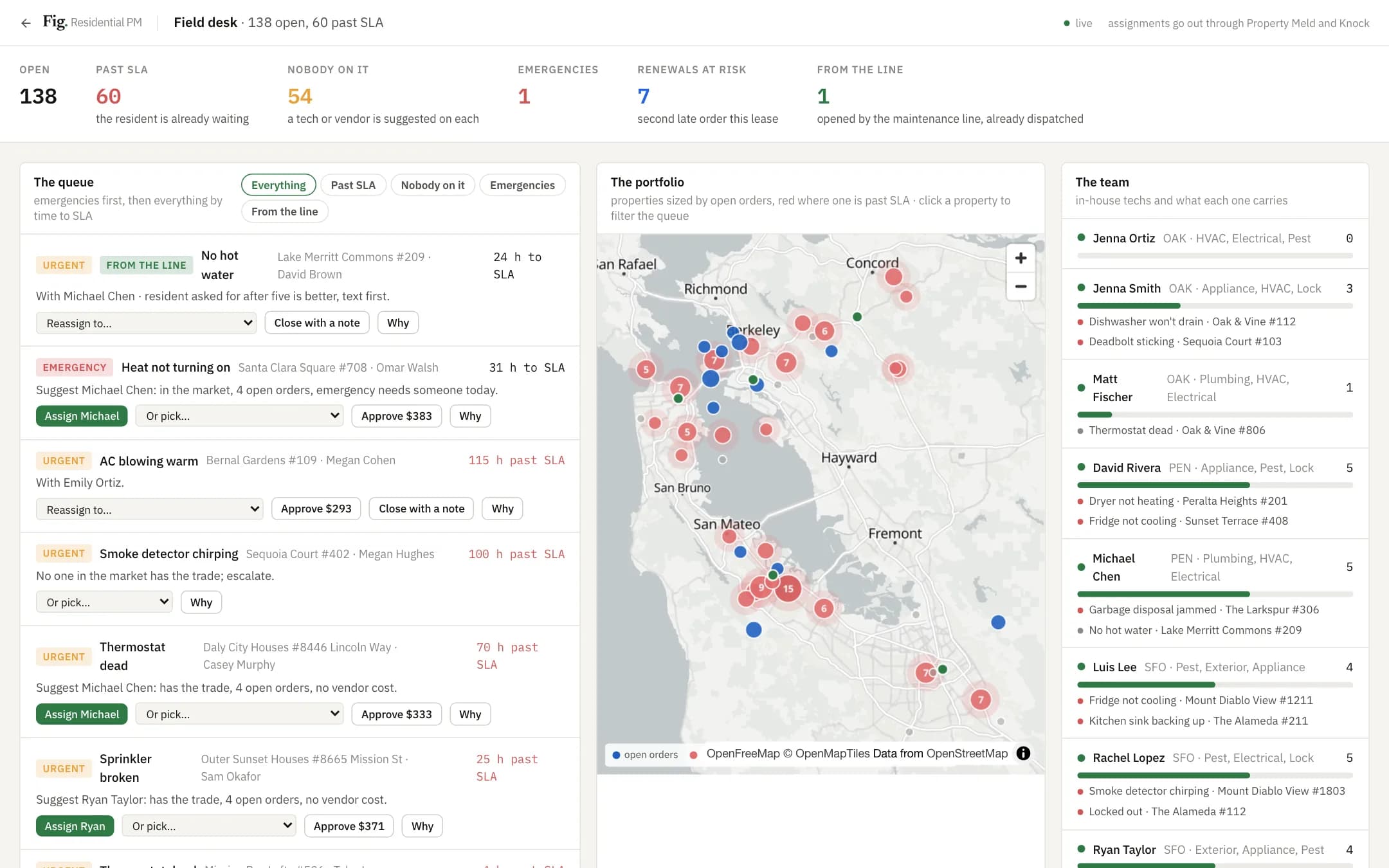
Work orders past SLA and the vendor nobody called
A triage queue by time to SLA, emergencies first, with the tech or vendor the agent suggests on every unassigned order and why: the trade, the load, the vendor's days and cost, whether their insurance is current.
 Production ready in 15 days
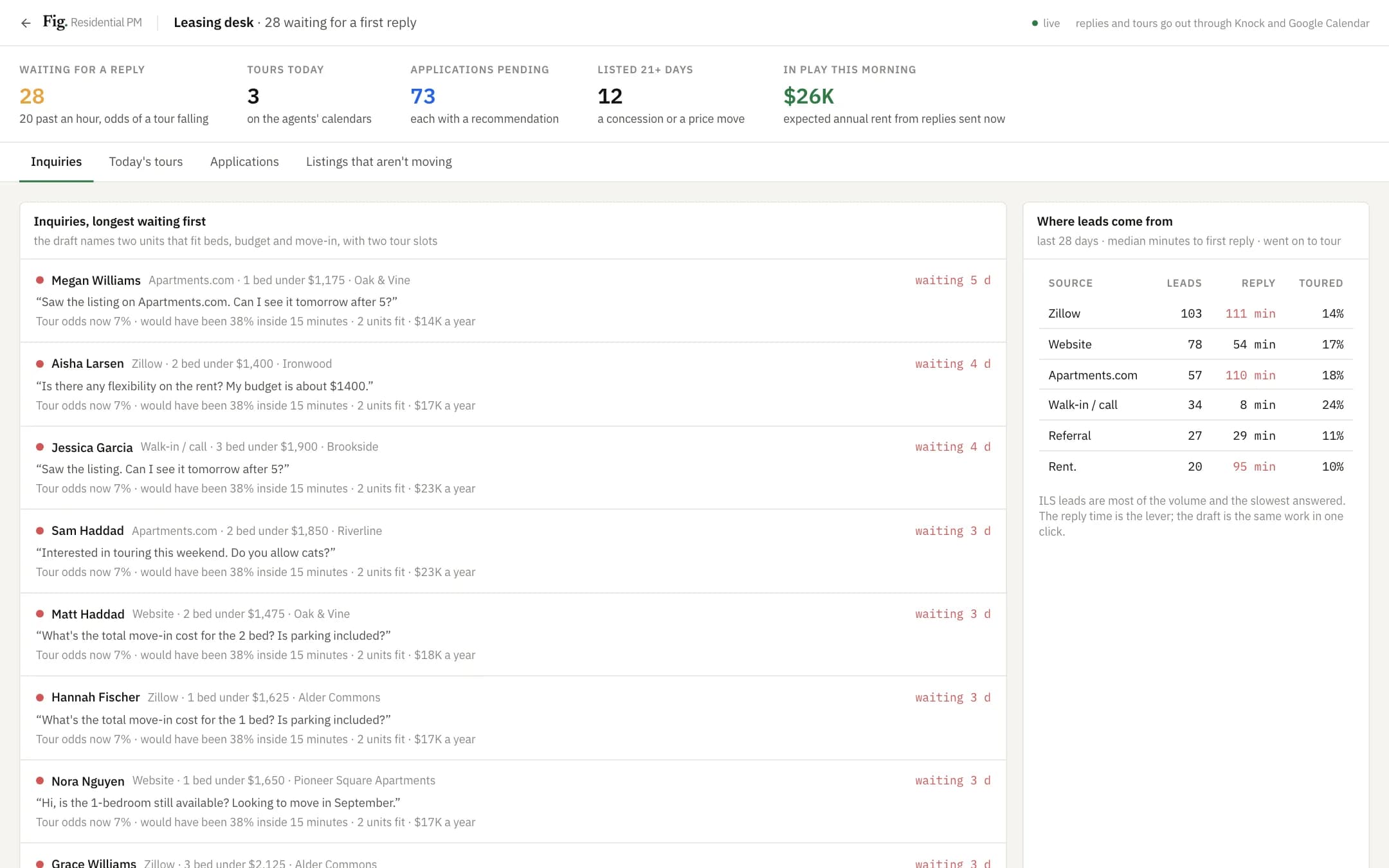
Inquiries waiting, tours to fill, applications stuck
An inbox by minutes waiting, with a drafted reply on every inquiry that names two units that fit and two tour slots; today's tours as a day; applications as a review deck with a recommendation on each card.
 Production ready in 10 days
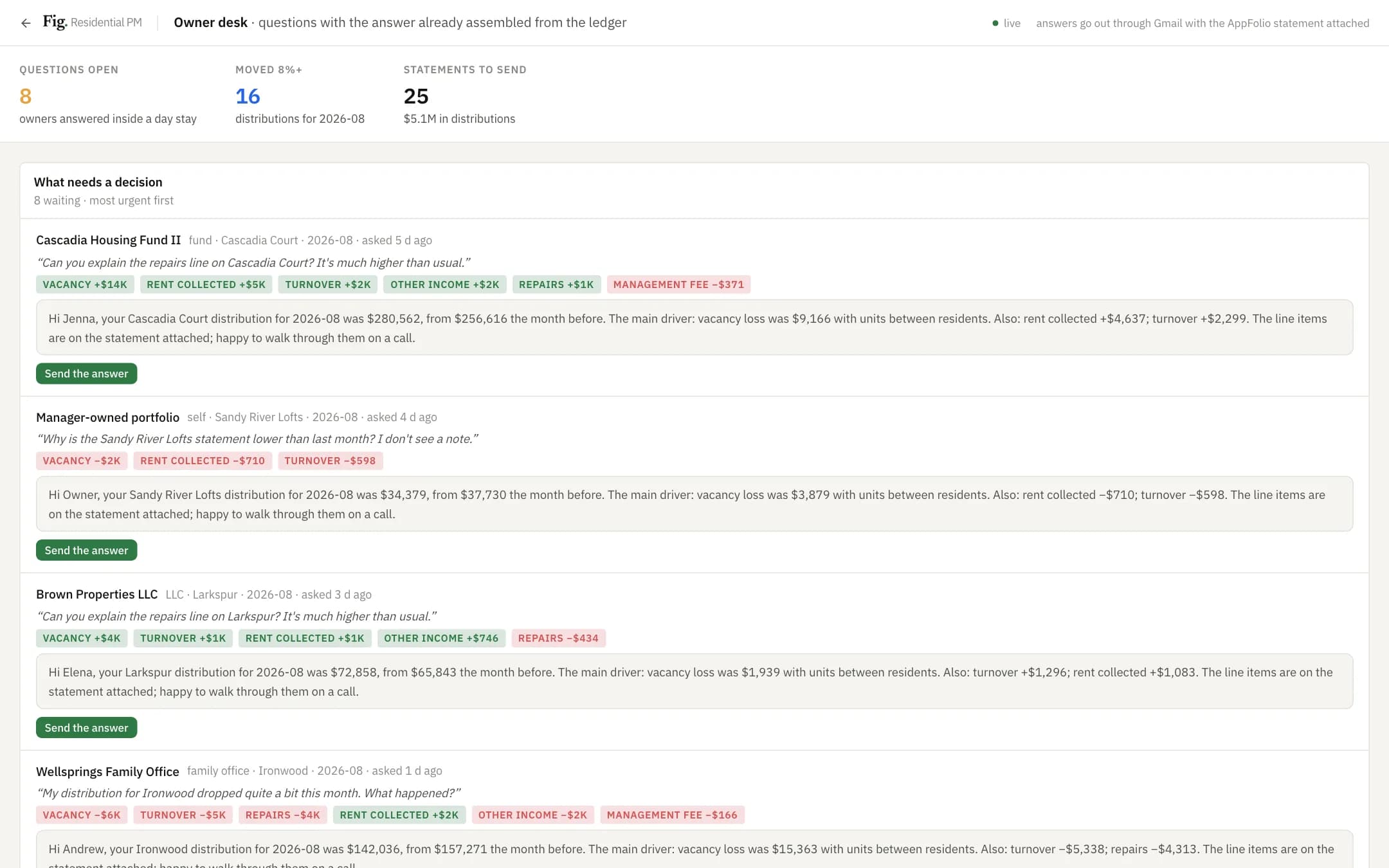
The owner asking why the statement moved
A month-end desk: owner questions with the answer already assembled from the ledger lines that moved, distributions that swung 8%+ with the reason attached, and statements ready to send with the variance note inside.