Clear to build
Clear to build across a supply chain: global KPIs of bottlenecked and filled sales orders under a primary and a secondary allocation strategy, the plant network on a world map, pages for materials, vendors, customers and operations, and the allocation of scarce material simulated against revenue, margin and customer satisfaction before bottlenecks are mitigated.
One working session with the people in the seat: which decisions, which systems, what a good week looks like.
The app you see above, running on your own exports instead of the simulated world. Every screen, every decision, your numbers.
Wired to your systems with your permissions, agents proposing, people approving, the ledger recording who did what.
Overview
When a material is short, the question is which customer orders and production orders get it. The answer lives across the ERP, supplier confirmations and the plant schedule, and by the time it is assembled the situation has moved.
The control tower evaluates every product, product line, customer order and production order against its material positions. Choosing a primary and secondary allocation strategy shows how many orders fill in full and what revenue, margin and satisfaction each strategy yields; bottlenecks are identified with the constraint behind them and the mitigation, such as an expedite or a re-allocation, applied from the page. Alerts raise spikes in demand, at-risk purchase orders and machine downtime as they happen.
Key features
- Live material allocation simulation: how allocation strategies affect customer satisfaction, margin and revenue when orders cannot be met in full.
- Automated bottleneck identification and mitigation: the constraints on the critical path, prioritised by business outcome.
- Situation optimization alerting: order spikes, at-risk purchase orders and unexpected downtime surfaced for immediate response.
- Pages for materials, vendors, customers and operations connected through the ontology.
Decisions it produces
- Choose the primary and secondary allocation strategy
- Re-allocate scarce material between orders
- Expedite an at-risk purchase order
- Respond to a disruption alert
Data sources
| ERP | sales orders, production orders, stock, purchase orders |
|---|---|
| MES | capacity and downtime |
| Suppliers | confirmations and at-risk deliveries |
| Demand planning | forecast by product and customer |
Simulated data throughout. Book a call to see it on your own systems.
Related demos
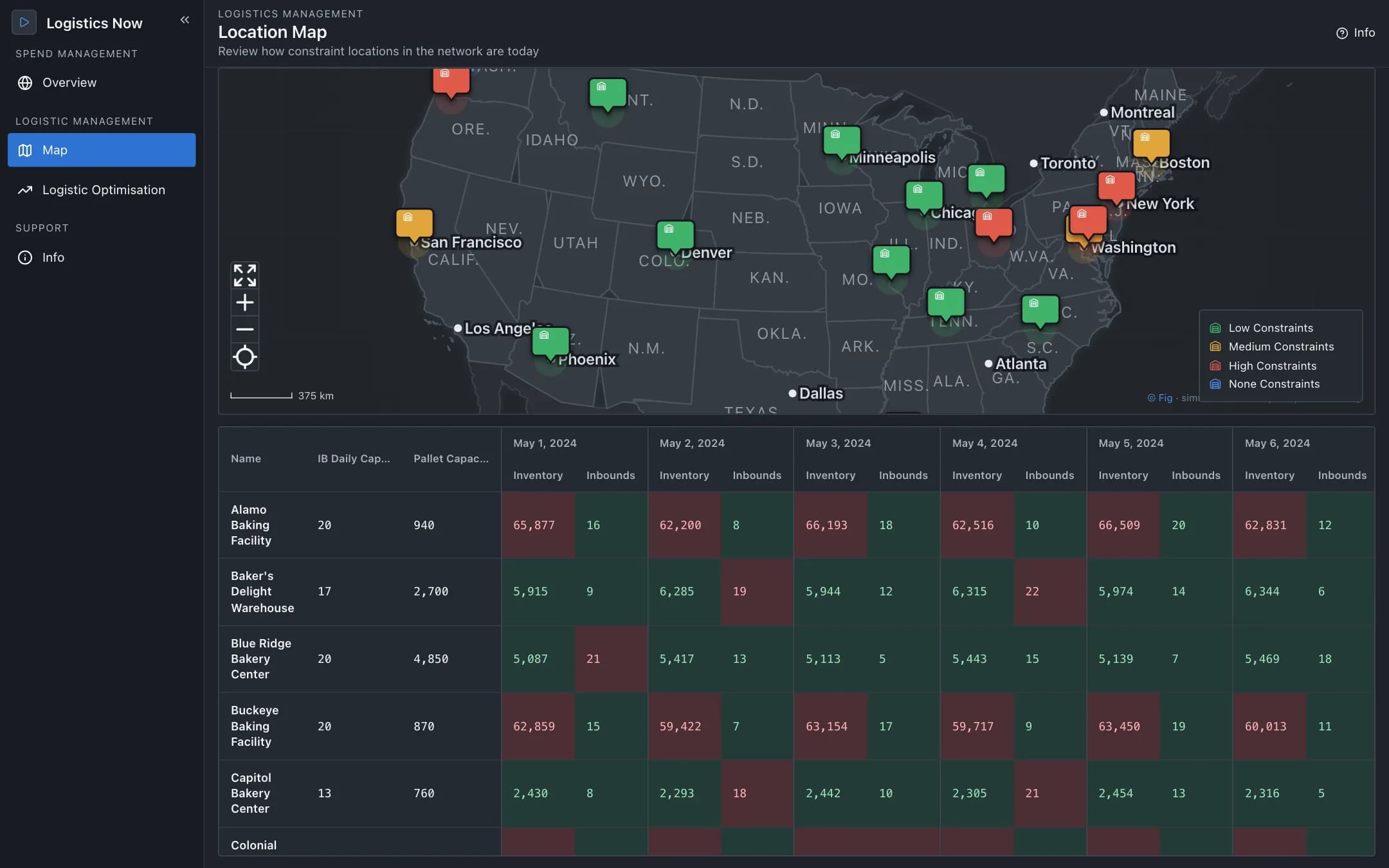
Supply chain logistics
A control tower for the distribution network: sites on a map coloured by constraint with day-by-day inventory and inbound capacity, a linear optimiser's stock-transfer recommendations to accept with ERP write-back or reject with a reason, and a spend and acceptance tracker.
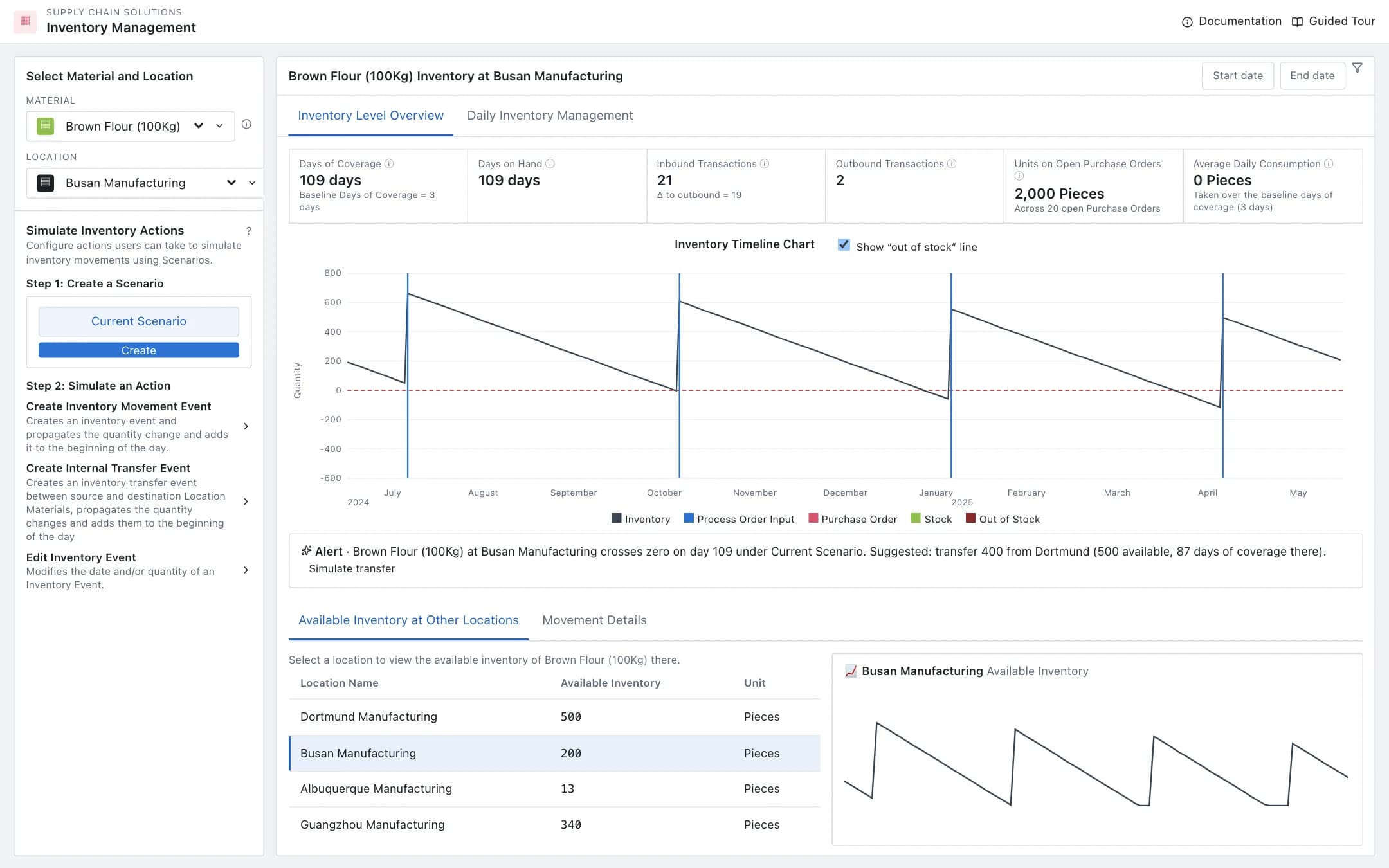
Inventory management, visibility and simulation
Inventory visibility and simulation: a material at a location with days of coverage, transactions and open orders, the inventory timeline with the out-of-stock line, the daily inventory table, available inventory at other locations, and scenarios that simulate movements, transfers and edits against the timeline before the operator commits them.
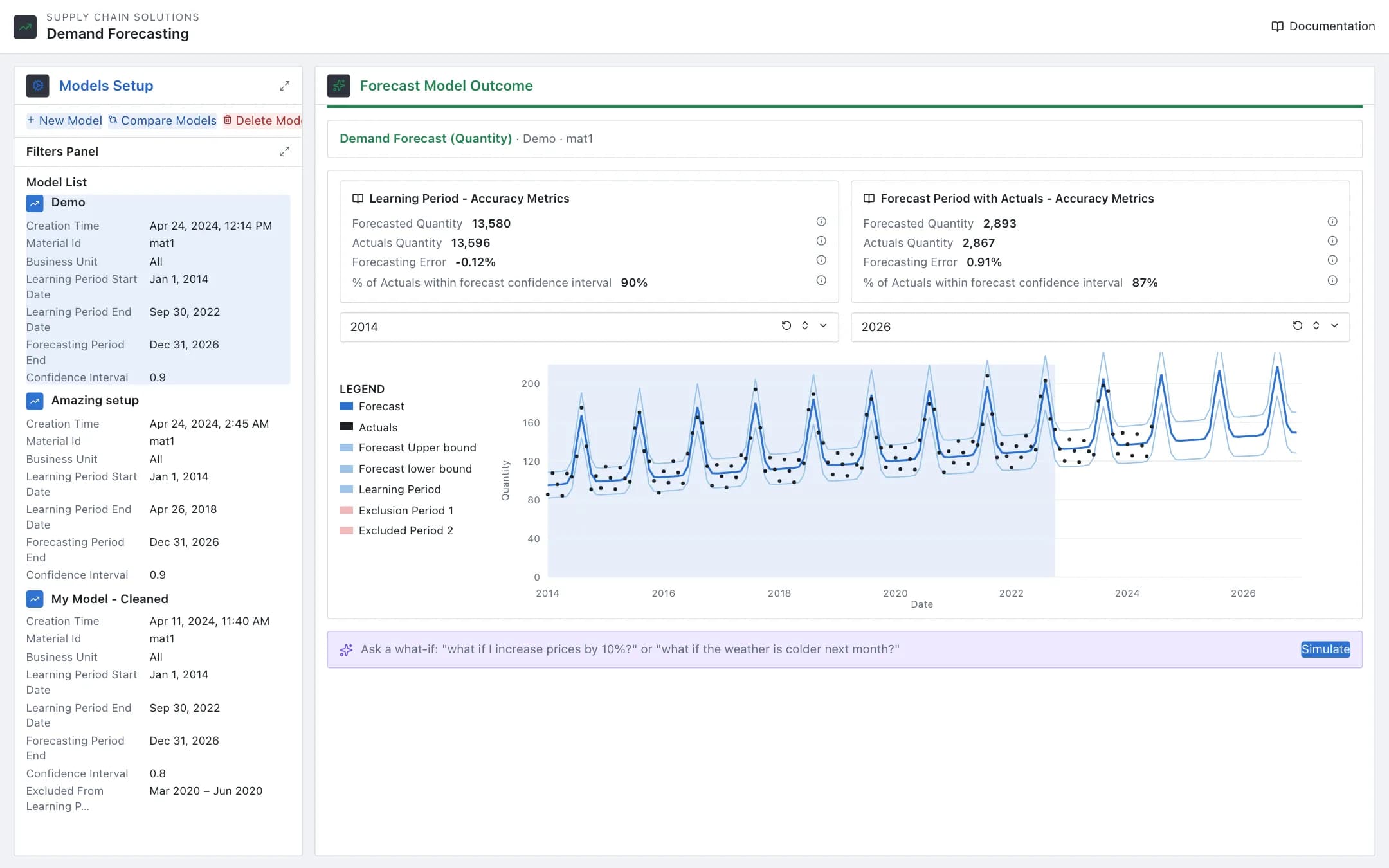
Demand forecasting
Forecast models per material and business unit with a learning period, exclusions and price assumptions; the outcome shows the seasonal forecast against actuals with accuracy metrics, models compare side by side, and a plain-language what-if re-runs the forecast.