Demand forecasting
Forecast models per material and business unit with a learning period, exclusions and price assumptions; the outcome shows the seasonal forecast against actuals with accuracy metrics, models compare side by side, and a plain-language what-if re-runs the forecast.
One working session with the people in the seat: which decisions, which systems, what a good week looks like.
The app you see above, running on your own exports instead of the simulated world. Every screen, every decision, your numbers.
Wired to your systems with your permissions, agents proposing, people approving, the ledger recording who did what.
Overview
The forecast is a spreadsheet one analyst understands, refreshed monthly. Planners cannot ask what a price change or a cold month does to it, and there is no record of how last year's forecast performed.
The app runs several models per SKU and compares them on the learning period's error. A planner creates a model from a form (material, learning period, exclusions, confidence interval, expected price), reads forecast against actuals with the confidence band, compares models, and asks what-ifs in plain language that change the model's price and weather coefficients. Forecasts are saved, so every version's accuracy is visible.
Key features
- Live demand simulation: coefficients and confidence intervals behind a cockpit where a what-if prompt changes price or weather assumptions and re-runs the forecast.
- Business-user focused interface: models created and validated from a form, with learning period, exclusions and assumptions, no code.
- Highly configurable modeling: daily, weekly, monthly or yearly cadence across customers, SKUs and product lines.
- Model comparison: forecast and actuals, error and confidence-interval coverage side by side for any two models.
Decisions it produces
- Create a model with its learning period, exclusions and assumptions
- Choose the model to publish for a SKU
- Run a what-if and share its outcome
- Delete or re-run a model
Data sources
| Historical sales | quantity by material, business unit and period |
|---|---|
| Inventory | stock-outs that mask true demand |
| External data | weather, calendar and price indexes as regressors |
| Planner inputs | future price, promotions and other known variables |
Simulated data throughout. Book a call to see it on your own systems.
Related demos
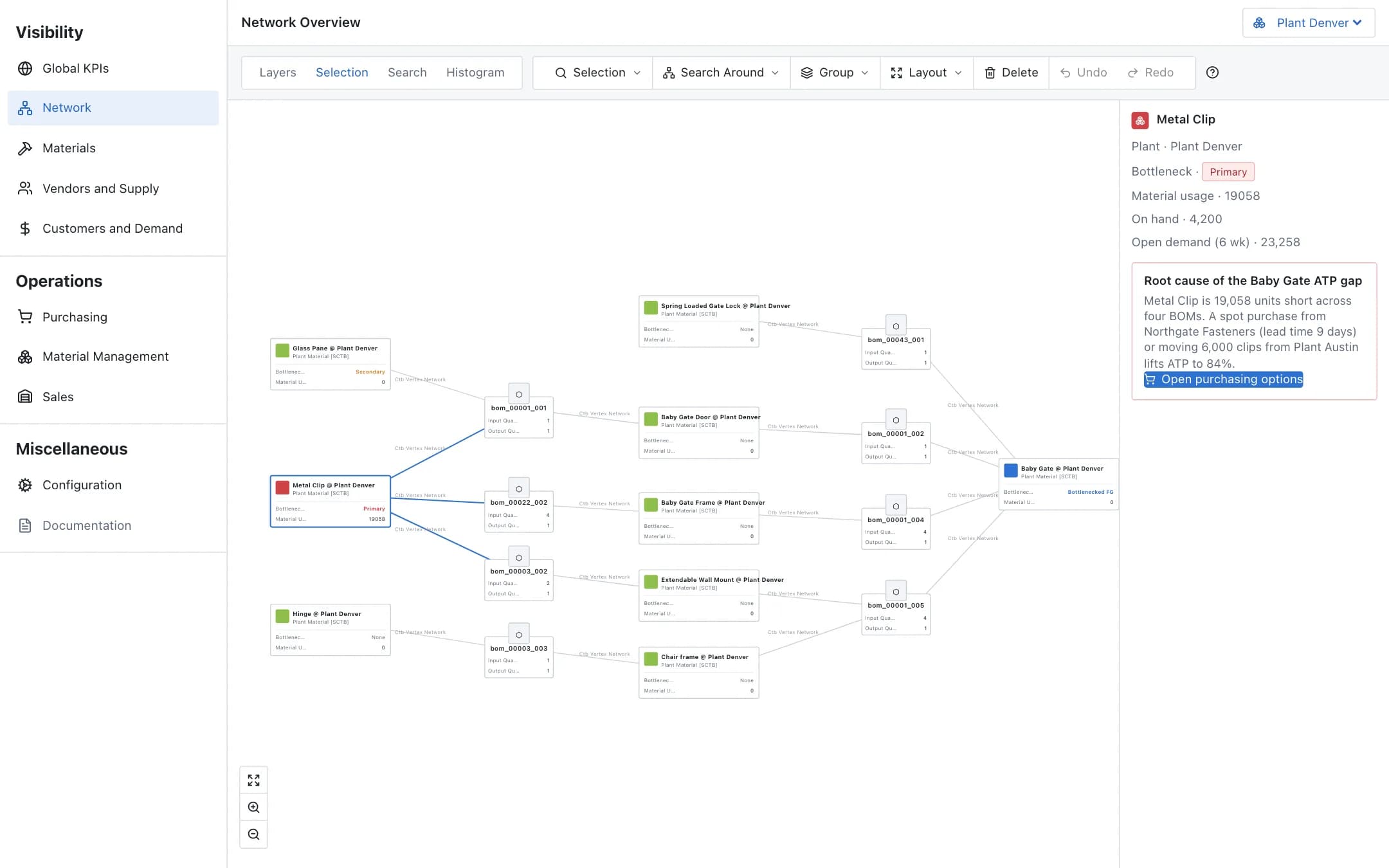
Available-to-promise
Real-time available-to-promise across the plant network, the bill-of-material graph that shows which component is the bottleneck, and simulated mitigations in purchasing, material management and sales that are committed with write-back.
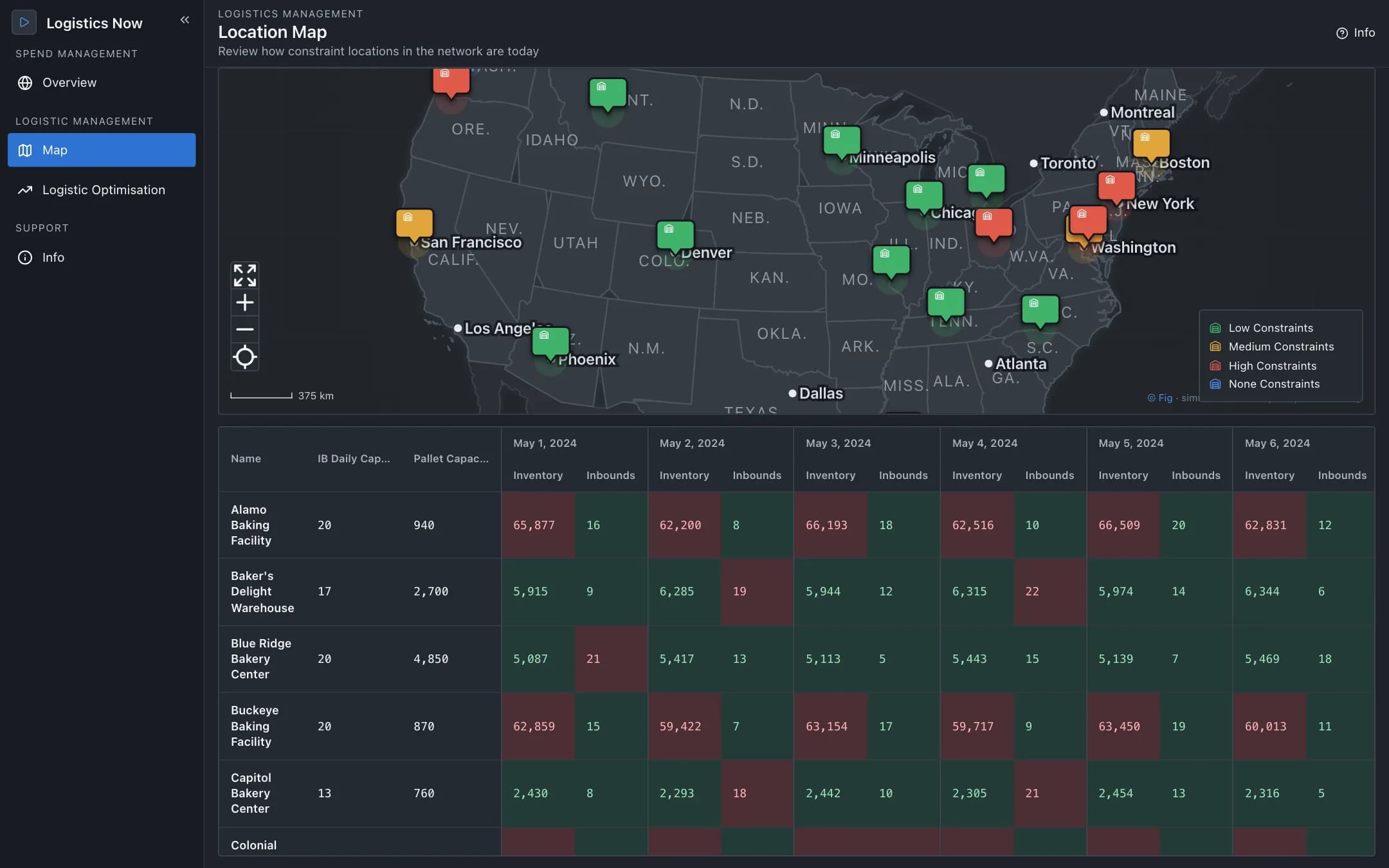
Supply chain logistics
A control tower for the distribution network: sites on a map coloured by constraint with day-by-day inventory and inbound capacity, a linear optimiser's stock-transfer recommendations to accept with ERP write-back or reject with a reason, and a spend and acceptance tracker.
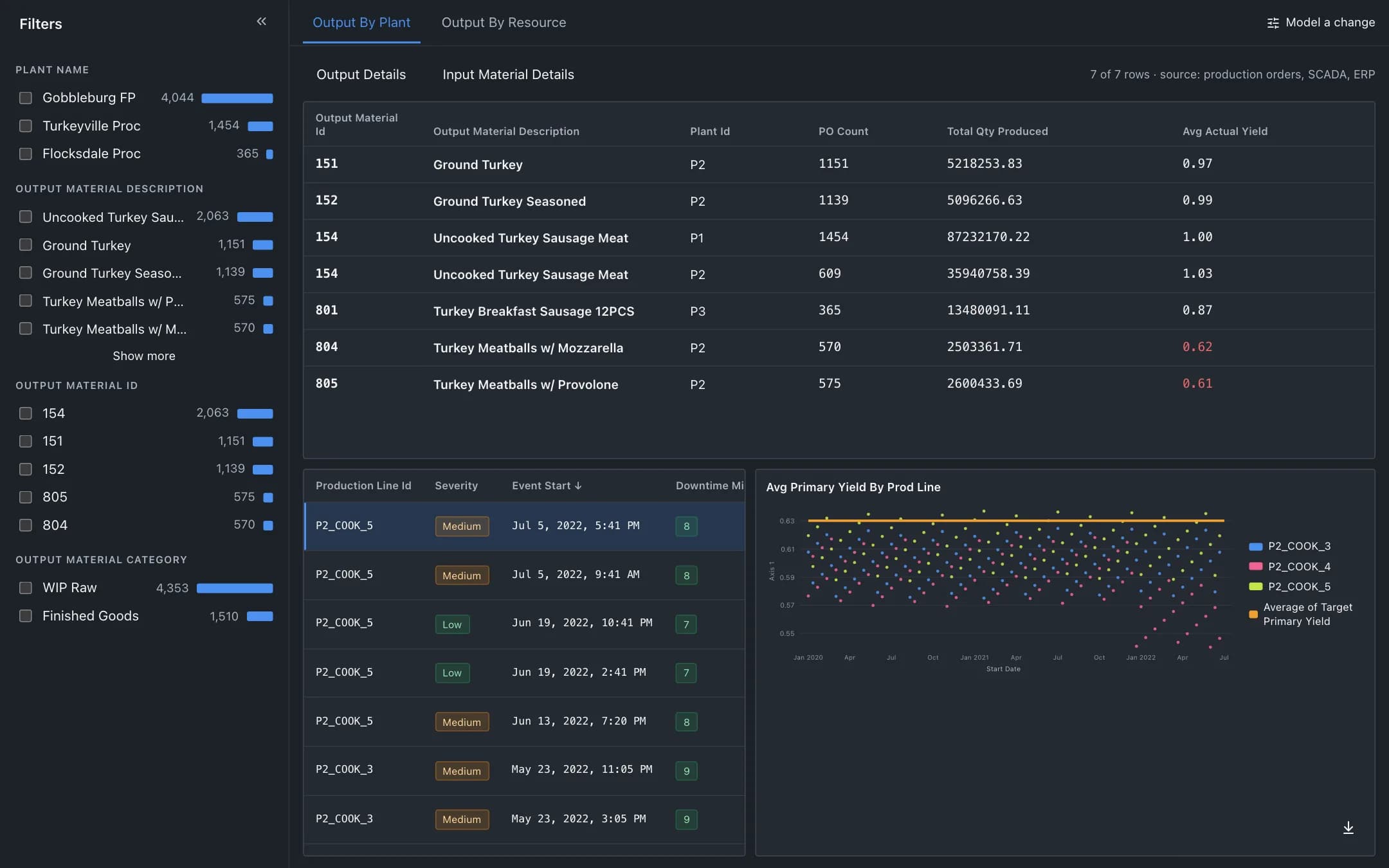
Yield optimization and batch analysis
Yield and cost at the granularity of a batch: output by plant or line against target, the downtime events behind a dip, and a scenario panel that models a setpoint change and orchestrates it to the line inside HACCP limits.