Equipment surveillance and smart alerting
Real-time surveillance of physical assets: sensor series streamed against a simulated baseline, alerting rules written in plain language and back-tested, cases opened from alerts with an automatic summary, a root cause analysis and a suggested resolution to approve or reject, and the pipeline that turns historian columns into time series.
One working session with the people in the seat: which decisions, which systems, what a good week looks like.
The app you see above, running on your own exports instead of the simulated world. Every screen, every decision, your numbers.
Wired to your systems with your permissions, agents proposing, people approving, the ledger recording who did what.
Overview
Sensor data streams from the historian into dashboards that engineers scan by eye, and the alerts that exist are thresholds set years ago. An anomaly becomes a case only after someone notices, and the fix that worked last time is in an email.
The app streams the series and plots measured against simulated rates. An alerting rule is typed in plain language, generated as a function and back-tested on history. Each alert can open a case with an AI summary, a root cause analysis across sensor data, P&IDs, maintenance logs and failure descriptions, and a suggested resolution drawn from SOPs and resolved cases; approving it raises the work order and records the outcome for the next suggestion.
Key features
- Real-time streaming platform: sensor data from SCADA and historians integrated with P&IDs, maintenance logs and failure descriptions.
- Sensor analytics: time series charts and surveillance dashboards generated from a description.
- Smart alerting: alert functions written in natural language, back-tested and enabled.
- Case management and summarization: cases with AI summaries, root cause analysis and suggested resolutions to approve or reject.
Decisions it produces
- Enable or disable an alert function
- Open a case from an alert
- Approve or reject a suggested resolution
- Send the case report to the crew
Data sources
| Historian | oil, gas and pressure time series |
|---|---|
| Maintenance management | logs, service intervals, work orders |
| Documents | P&IDs, SOPs, failure descriptions |
| Case management | cases, feedback, resolutions |
Simulated data throughout. Book a call to see it on your own systems.
Related demos
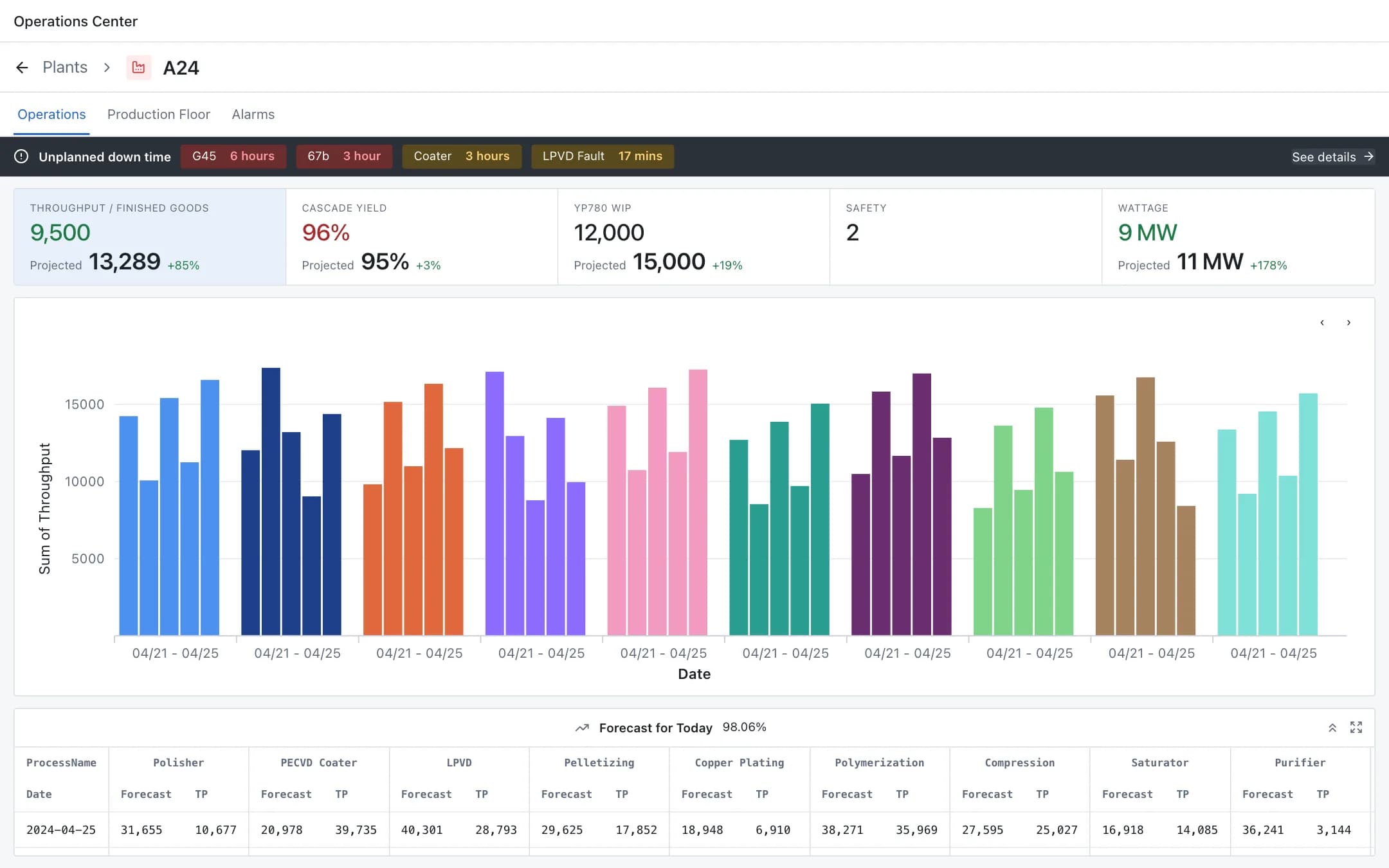
Plant digital twin
A live digital twin of the plant: operations KPIs and throughput by process, the production floor from building to zone to a single pump with its sensors, images and manual, and incident management with approve, reject and take action.
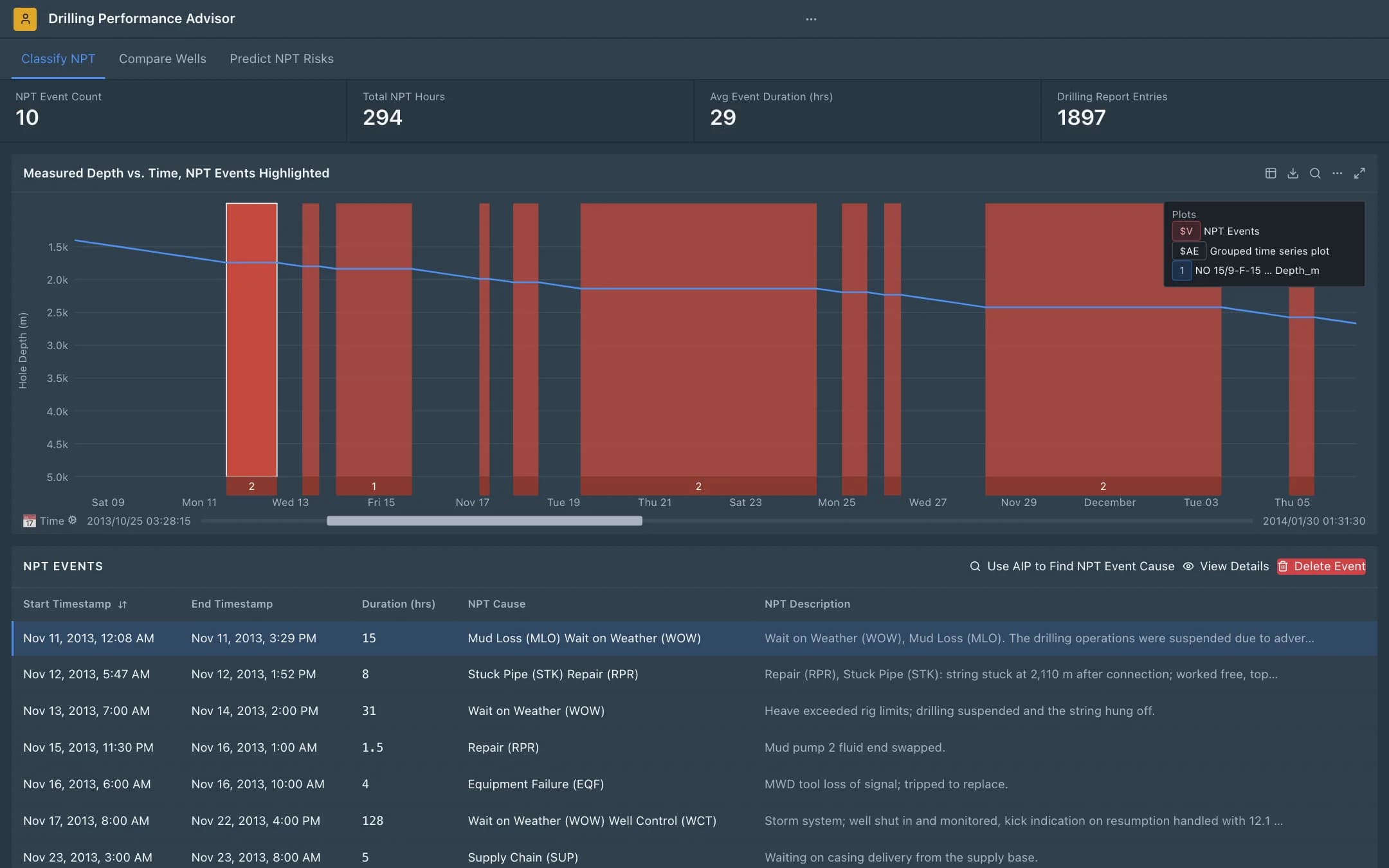
Drilling non-productive time
A drilling advisor that shows measured depth against time with every non-productive time event highlighted, classifies each event's root cause from drilling reports, sensor data and maintenance history, compares analogous wells with the best practices found in their resolved events, and predicts the NPT risk of a well being planned.
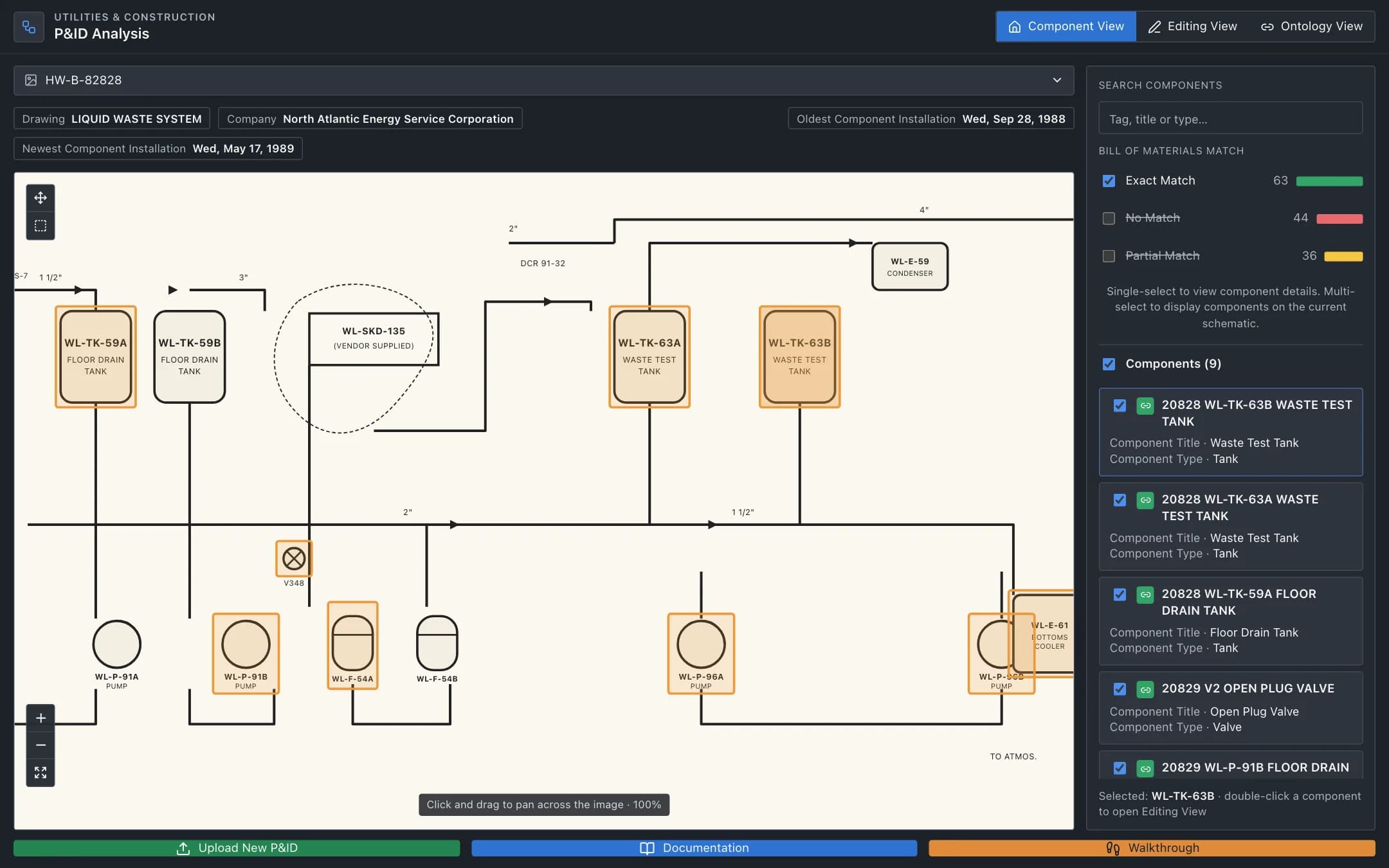
P&ID analysis
Components and their tags extracted from scanned P&ID drawings by a vision model, matched to the bill of materials, validated and relabeled by a maintenance engineer, and published as an ontology of the plant.