Retail workforce planning and scheduling
Retail workforce planning: a national manager home with every store on the map, hours against target, flagged roster opportunities and state and store summaries, a workforce shape explorer comparing scheduled and target headcount by 15 minutes under location, date and job filters, and a store dashboard where shifts are inspected, moved, deleted and added, with every change queued in the roster changes list.
One working session with the people in the seat: which decisions, which systems, what a good week looks like.
The app you see above, running on your own exports instead of the simulated world. Every screen, every decision, your numbers.
Wired to your systems with your permissions, agents proposing, people approving, the ledger recording who did what.
Overview
A national manager sees payroll totals; a store manager sees a spreadsheet of shifts. Neither sees whether the right person with the right skill is working when the forecast says customers arrive.
The control tower overlays the network with overspend, over and under rostering and alignment to employee preferences, and drills from a state to a store to a shift. The shape explorer shows scheduled against target headcount through the day by employee type. In the store dashboard, the manager inspects a shift, moves or deletes it, or finds someone with the skill and availability to add, and each change is queued for review before it reaches the roster.
Key features
- Control tower for national managers: workforce overspend, over or under roster and preference alignment across the network.
- Integrated workforce planning: drill from the national view to individual shifts, with best and worst stores highlighted.
- AI suggested scheduling: rules-based, risk-based and AI-based gaps between the schedule and the operating model, as prioritised actions.
- Insight oriented reporting: dynamic metrics on customer service, efficiency and employee satisfaction.
Decisions it produces
- Open a store's flagged opportunity
- Move or delete a shift
- Add someone with the right skill to a shift
- Review and discard roster changes
Data sources
| Forecast | target headcount by store, job and 15-minute slot |
|---|---|
| Schedules | shifts by employee and job |
| HR | employee type, preferences, skills |
| Locations | stores by state |
Simulated data throughout. Book a call to see it on your own systems.
Related demos
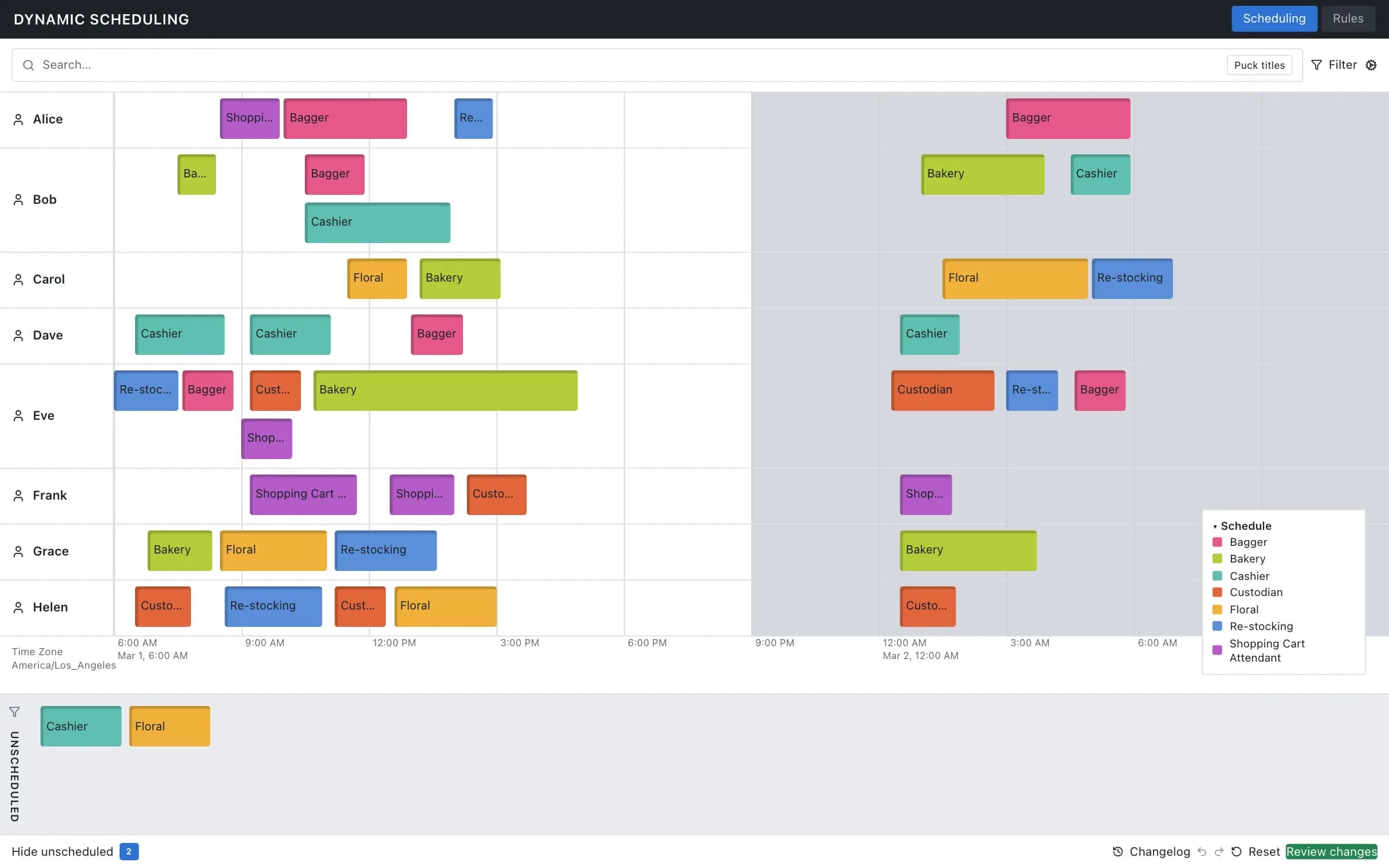
Dynamic scheduling
A shift board of employees and task pucks over the day with an unscheduled tray, undo, redo, reset and a review step, and a rules tab where deadline, duration, gap, overlap and sequence constraints are enabled, disabled, debugged or written in plain language and translated into constraints the board enforces.
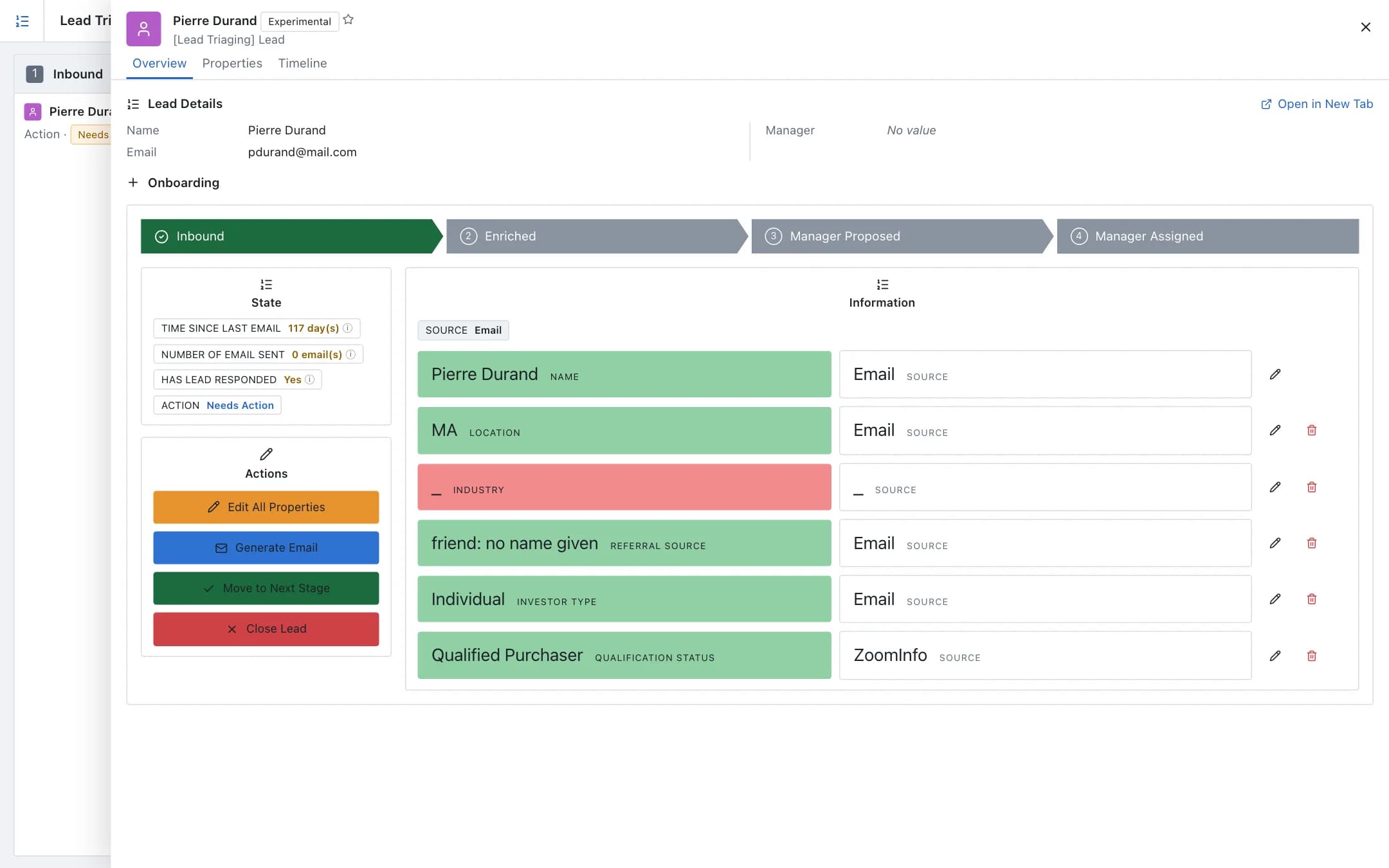
Lead triage and management
An inbound lead board with four stages: leads extracted from email and enriched with enterprise context, a proposed manager with the reasoning, approval or rejection of the proposal, and every edit, generated email and stage change written back to the CRM.
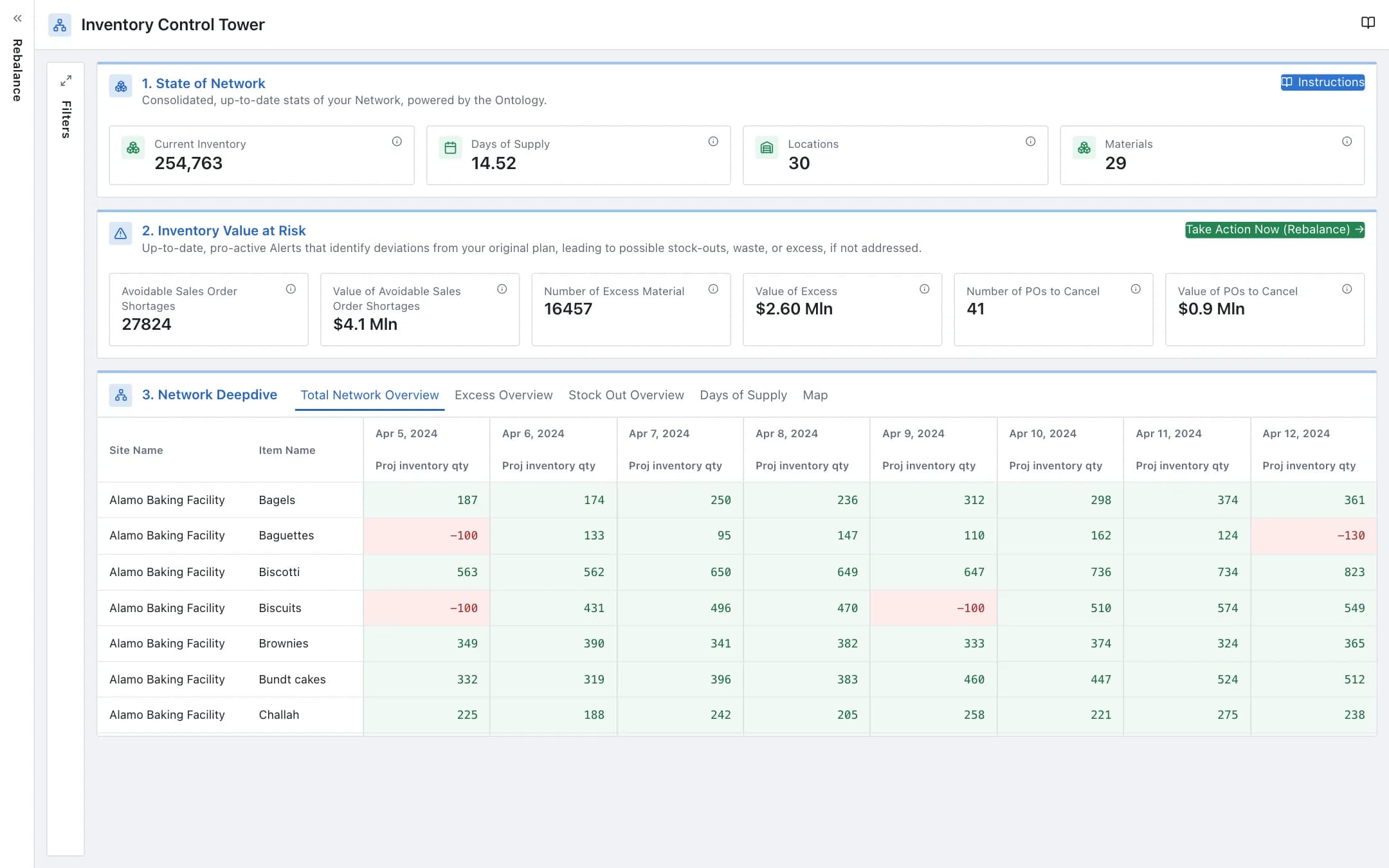
Inventory rebalancing
A control tower over the network's inventory, days of supply and value at risk, with a site-by-site, day-by-day projection and a map, and a rebalance page that lists excess alerts, shows the projected inventory with and without the move, and executes the transfer to the target site.