Resources
Perspectives
Where enterprise AI is going, and what we think it should look like.

Anthropic's S-1: a preliminary read
Anthropic filed publicly to go public on Oct 26. A first read of the numbers, the margins, the compute commitments, the governance and the risk factors, and what the filing still leaves blank.
Agents at the bank's door
In October, the largest US banks shut out the AI agents their customers had started using to manage money. What they blocked, why it is hard, and a practical roadmap for financial institutions to let agents in safely.
Early October 2026: AI gets a budget
The month in AI, first half of October. What business leaders should take from two weeks of AI news.
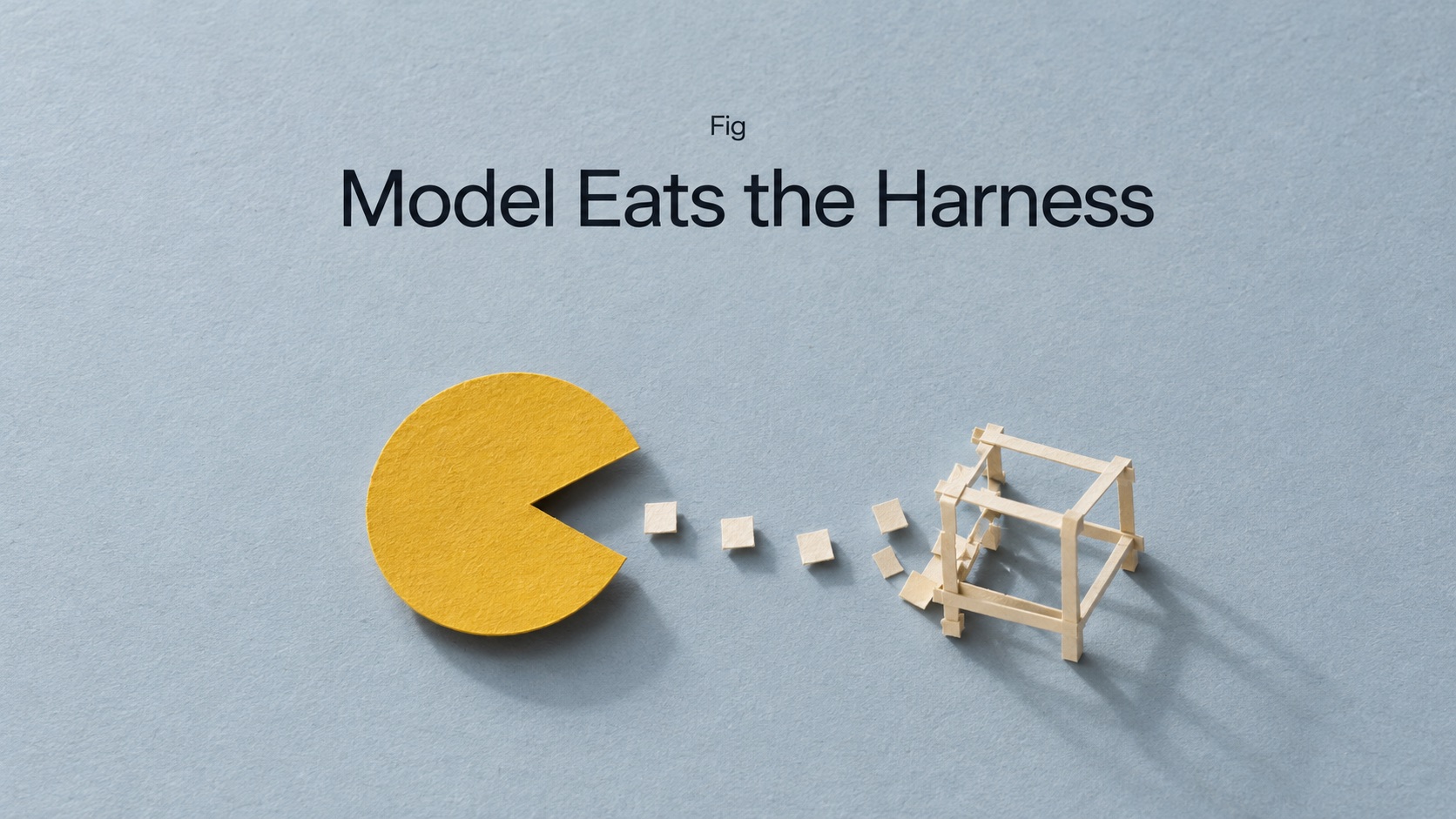
The model is eating the harness
Work that AI systems once had to build around the model keeps becoming part of the model. What that pattern looks like, why it keeps happening, and how to build systems that get better with every release.

September 2026: the month agents moved in
The month in AI. Always-on agents went mainstream, frontier models got cheaper and harder to get at the same time, and safety stopped being theoretical.

The risk isn't the deepfake
Deepfakes get the headlines. The larger risk for a campaign is the AI it deploys itself: answering voters, speaking in the candidate's name, at a scale no one reviews.

The Long Lake playbook
A three-year-old AI holding company just closed a $6.3 billion take-private of Amex GBT. How the model works, what it claims, what is still unproven, and what private equity should take from it.

Beyond cost: AI as a revenue engine
Most portfolio AI plans are cost plans. The larger and more durable opportunity is revenue: capacity that turns into growth, new AI products and services, and new ways to price.

Choosing an AI partner for your portfolio
Lab-owned deployment firms, consultancies, integrators, platform partners or building it yourself. Four questions that separate them, and why model choice matters over a seven-year hold.

The deskless majority
Most of the workforce has never had a keyboard, a login, or an hour to spare for training. The interface problem that kept them off enterprise software is the one this generation of AI removes.

No two institutions start in the same place
Higher education is covered as one market with one story. Five kinds of institution, what leadership in each is actually working on, and where AI tends to help first.

Your advantage is already on campus
Access to capable AI is now ordinary, which moves the question from what an institution can buy to what it already has. Four things a university holds that nobody can copy, and how each becomes a system.
Talking is not solving
Voice platforms advertise containment. Containment measures whether a call ended without a human. It says nothing about whether the caller's problem went away.

Where voice actually works
Voice stopped being a demo this year. A map of what it is good at now, what it is still bad at, and the places it should not go.
What forward deployed means
A job title that was one company's internal jargon three years ago is now the most contested role in AI. What it actually is, why it came back, and what it should leave behind.

What to build, and what to buy
Enterprises are buying most of their AI and worrying about what they bought. The build-or-buy line does not run between layers of the stack. It runs through every one of them.
Why evals matter
The public benchmarks stopped measuring anything useful this year. The instrument you build for your own work is the one that decides everything else.
Should I train my own model?
Where the model market stands this month, what each class is for, what the industry and the law constrain, when post-training pays, and how Fig thinks about it.

What an ontology is for
The word has escaped into every enterprise AI pitch. Here is what it actually means, why agents made it urgent, and how it becomes the foundation of an AI transformation.

Agents need your decision model, not just your data
Retrieval gives an agent what the company knows. A decision model gives it how the company decides, and that is what lets it act.

The Sovereign Frontier Enterprise
Adoption is universal and impact is concentrated. The difference is what a company owns around the models.